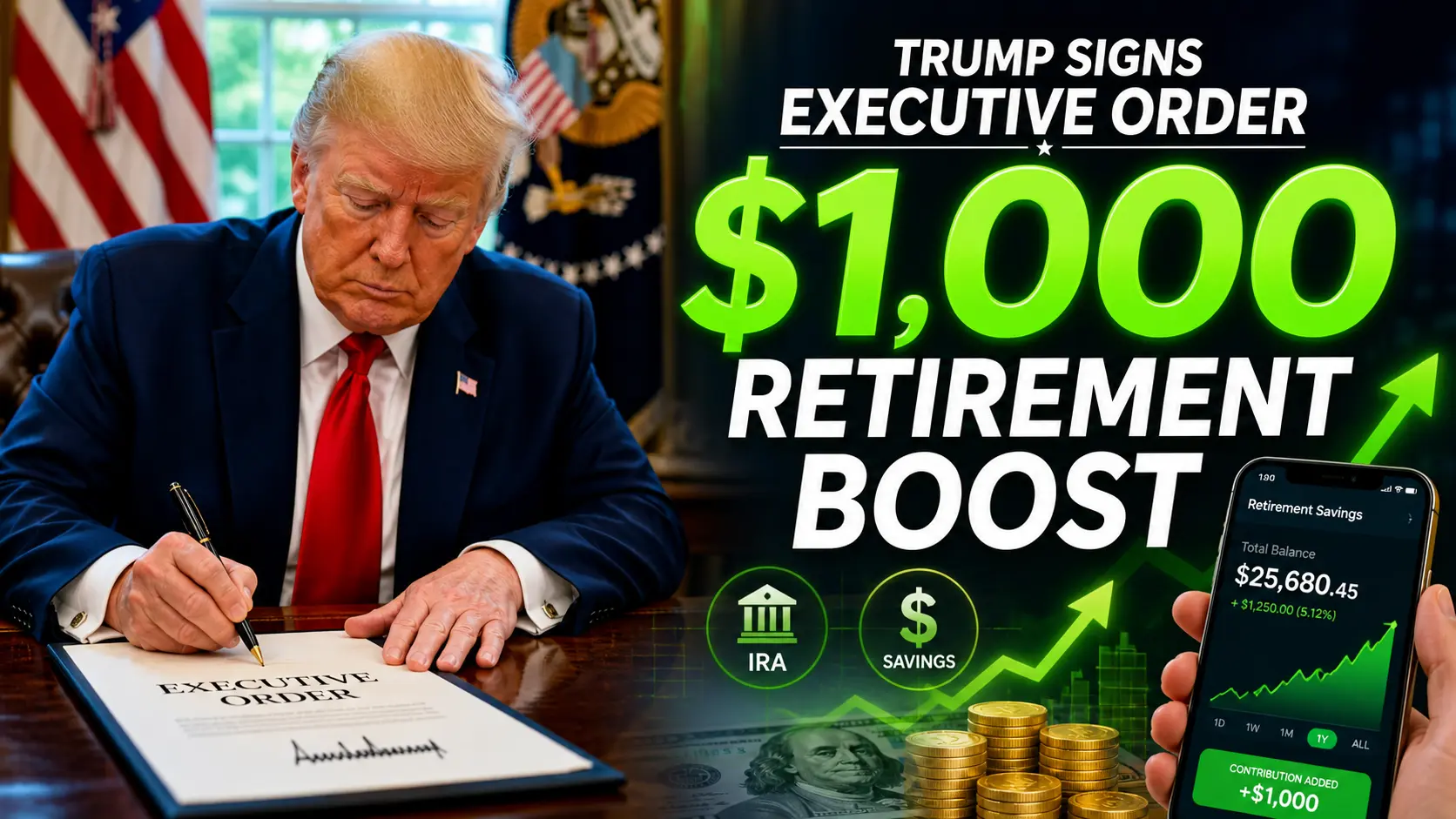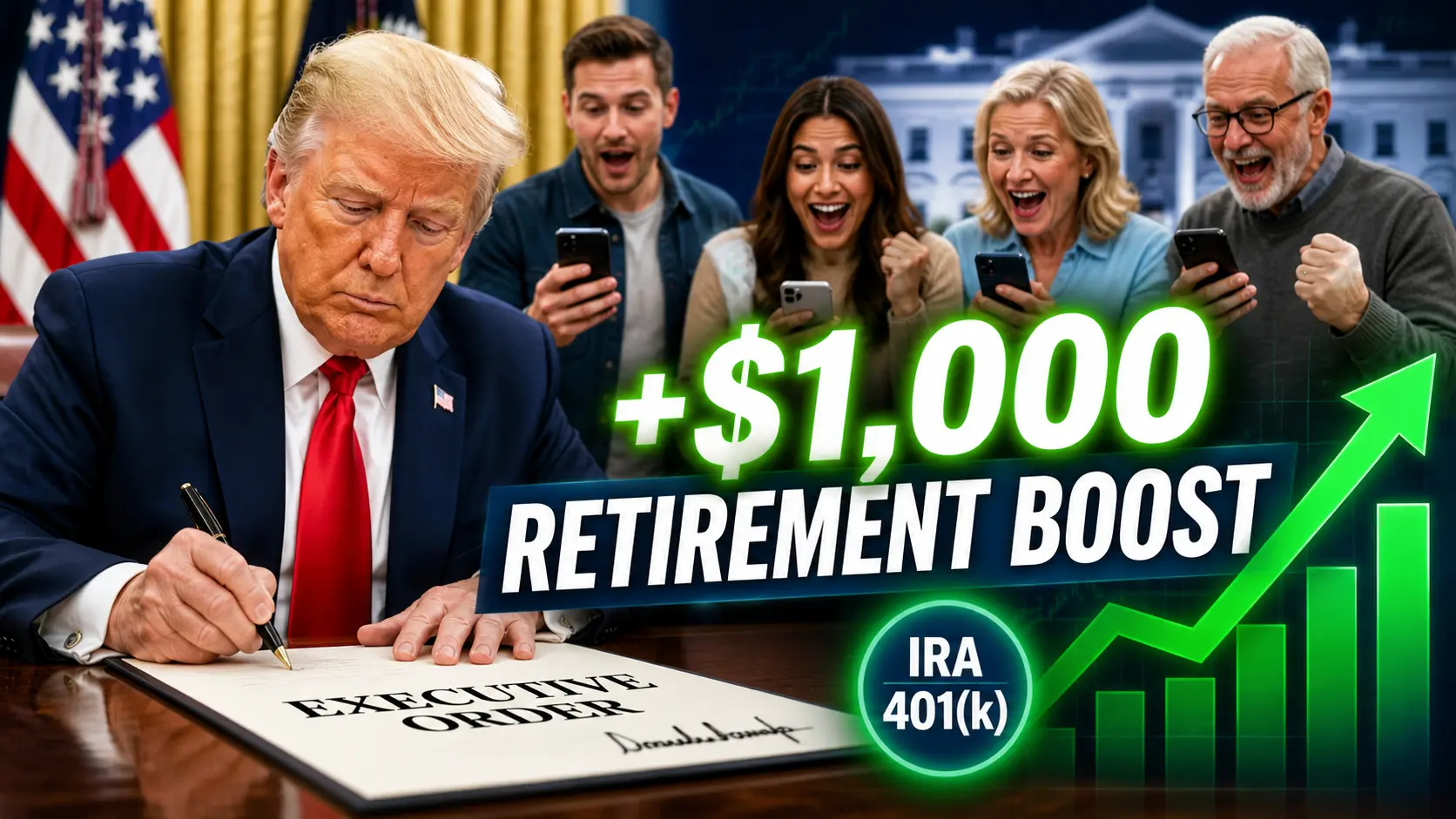
President Donald Trump signed a new executive order on April 30 aimed at expanding retirement savings options for millions of Americans—especially those whose employers don’t offer 401(k)-style plans.
The order introduces a new platform, TrumpIRA.gov, where workers will soon be able to enroll in private-sector retirement accounts. And there’s an added incentive: some savers could qualify for up to $1,000 per year in government matching contributions.
“Beginning at the start of next year, every American will be able to go to TrumpIRA.gov and open a new low-cost IRA account,” Trump said during an afternoon signing ceremony at the White House.
He added that the program will give Americans access to retirement plans similar to those available to federal employees.
How Does the TrumpIRA Program Work?
Under the executive order, workers will be able to use TrumpIRA.gov to compare and choose IRA options based on cost and quality. The platform will feature private providers offering low fees and no minimum contribution or balance requirements.
Anyone who doesn’t already have a workplace retirement plan can sign up.
Officials say these accounts will function similarly to the federal government’s Thrift Savings Plan.
SoFi’s Profit Doubles — But Wall Street Still Isn’t Impressed
Who Qualifies for the $1,000 Match?
The new plan aligns with the upcoming Saver’s Match program, originally introduced in 2022.
Starting in January 2027, nearly 22 million lower-income workers who contribute to retirement accounts could receive matching funds from the government—up to $1,000 per year.
To qualify:
- Single filers must earn less than $35,500
- Joint filers must earn less than $71,000
- The government match can cover up to 50% of contributions
This program replaces the existing Saver’s Credit. The key difference? Instead of reducing your tax bill, the Saver’s Match deposits actual money into your retirement account.
When Can You Sign Up?
If you’ve already tried visiting TrumpIRA.gov, you may have noticed it’s not live yet.
The executive order sets a launch deadline of January 1, 2027, which is when enrollment officially begins.
Why This Plan Matters for Retirement Savers
The TrumpIRA initiative is designed to tackle a major gap in retirement access.
According to data cited in the order:
- About 40% of full-time workers lack employer-based retirement plans
- Around 80% of part-time workers don’t have access at all
Despite decades of tax incentives, only about half of private-sector workers currently participate in 401(k) plans.
Trump highlighted this issue earlier in his 2026 State of the Union address, noting that while markets have boosted many retirement accounts, millions of workers are still left out.
Support and Industry Reaction
The plan has drawn support from advocacy groups like AARP.
“Americans are 15 times more likely to save for retirement when they have access to a workplace savings plan,” said Bill Sweeney, AARP’s senior vice president of government affairs.
He added that the new initiative, combined with the Saver’s Match, could significantly expand access to retirement savings.
What If You Earn More Than $35,500?
The current income cap limits eligibility for the Saver’s Match, but that could change.
Trump said he plans to ask Congress to expand the program to include higher-income earners.
White House economic adviser Kevin Hassett noted that many workers above the threshold still lack retirement savings.
Will Enrollment Be Automatic?
For now, workers will need to sign up manually.
However, the administration is considering automatic enrollment for those without workplace plans—similar to programs already adopted in many states.
Currently:
- 20 states have auto-IRA programs
- Workers are automatically enrolled but can opt out
A federal auto-enrollment system could bring an estimated 32 million additional workers into retirement savings programs, according to Morningstar.
How Much Will It Cost?
The initiative doesn’t come cheap.
Funding the Saver’s Match is expected to reduce federal revenue by $9.3 billion between 2028 and 2032, according to the Cato Institute.
If automatic enrollment is added, the cost could exceed $20 billion.
Critics warn that the spending comes as the federal system already faces a massive long-term shortfall.
Bottom Line
Trump’s new retirement initiative could reshape how millions of Americans save—especially those currently left out of employer-sponsored plans.
With a potential $1,000 yearly boost and easier access to IRAs, the program aims to close a long-standing gap in the U.S. retirement system.
But with big benefits also come big costs—and the real impact may depend on how widely Americans choose to participate.