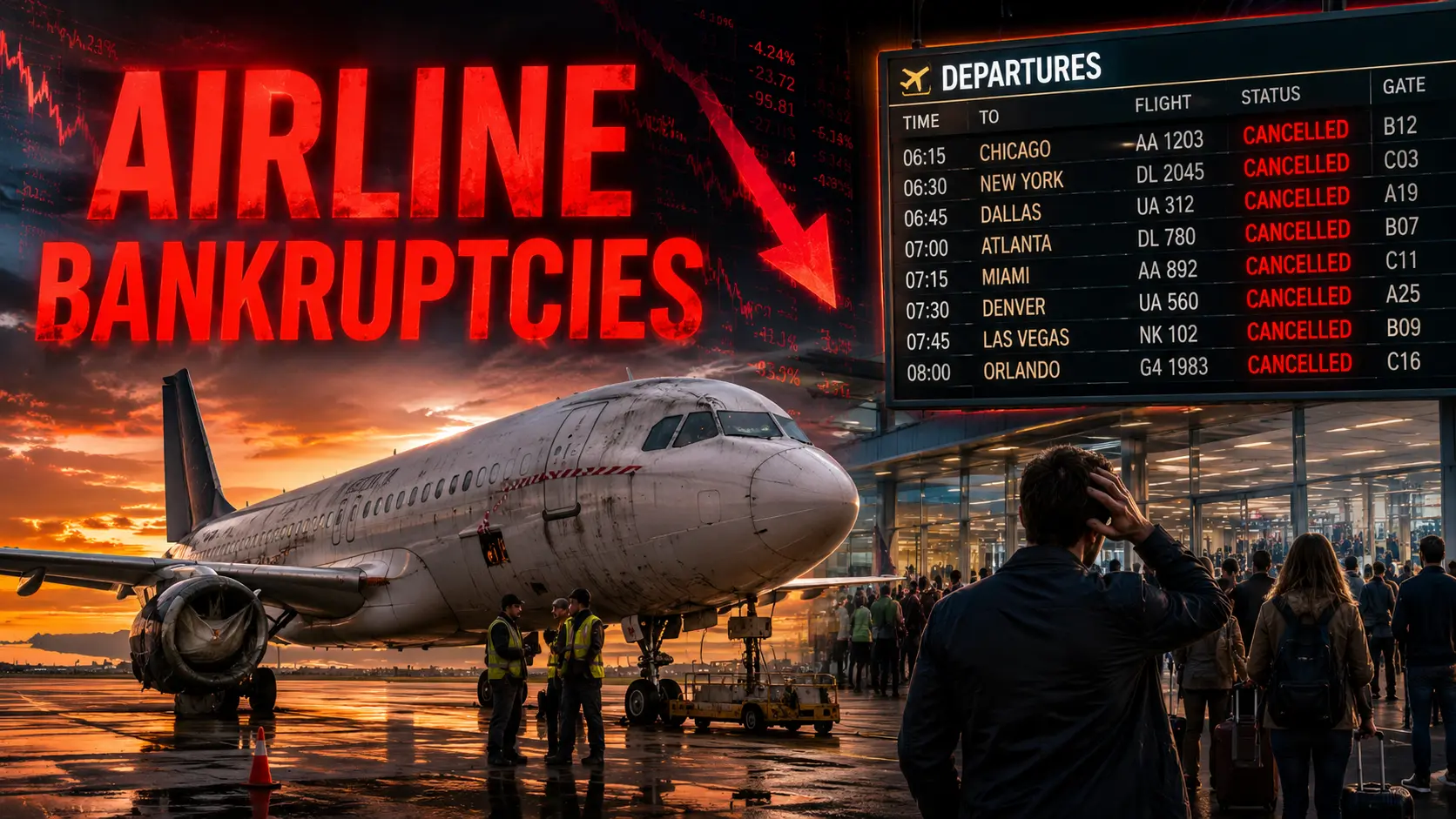
The airline industry’s financial troubles are far from over, and now another carrier has officially filed for bankruptcy protection as rising costs and weak demand continue to hit smaller airlines around the world.
According to recent reports, several airlines have struggled to survive in 2025 and 2026, with both regional and low-cost carriers facing mounting pressure from fuel prices, debt, and shrinking passenger traffic.
One of the latest airlines to enter bankruptcy proceedings is Air Calédonie, the regional airline serving the French overseas territory of New Caledonia. The company filed for bankruptcy after months of operational disruptions and public protests linked to the relocation of its airport base.
The filing comes as the global aviation sector continues to experience financial instability, especially among smaller airlines that operate with tighter margins and limited cash reserves.
At the same time, several other airlines have either filed for bankruptcy protection or warned they could soon face similar problems.
Among the biggest names under pressure is Spirit Airlines, which has already filed for Chapter 11 bankruptcy protection twice within a year. The ultra-low-cost carrier has struggled with debt, rising operating expenses, and weaker consumer demand after its failed merger attempts in recent years.
Spirit has been aggressively cutting costs as part of its restructuring plan. Court filings show the airline plans to reduce its fleet dramatically, shrinking from more than 200 aircraft before bankruptcy to roughly 76 to 80 planes by late 2026.
The airline has also sold aircraft, reduced routes, furloughed workers, and exited several airports in an attempt to stabilize operations.
Meanwhile, other smaller carriers around the world have also collapsed or suspended operations. Swedish charter airline H-Bird was declared bankrupt after losing its operating certificate, while multiple regional airlines in Asia and Europe have reportedly struggled to maintain enough revenue to continue flying.
Industry analysts say the airline business has become increasingly difficult for smaller operators. High fuel costs, expensive aircraft leases, staffing shortages, and intense competition from larger airlines are making it harder for budget and regional carriers to survive.
For travelers, these bankruptcies create uncertainty around flight schedules, refunds, and future bookings — especially when dealing with smaller airlines that may already be operating on thin margins.
Despite the growing list of airline failures, most major U.S. carriers continue to operate normally. But the recent wave of bankruptcies is a reminder that the aviation industry is still dealing with serious financial turbulence years after the pandemic-era recovery began.