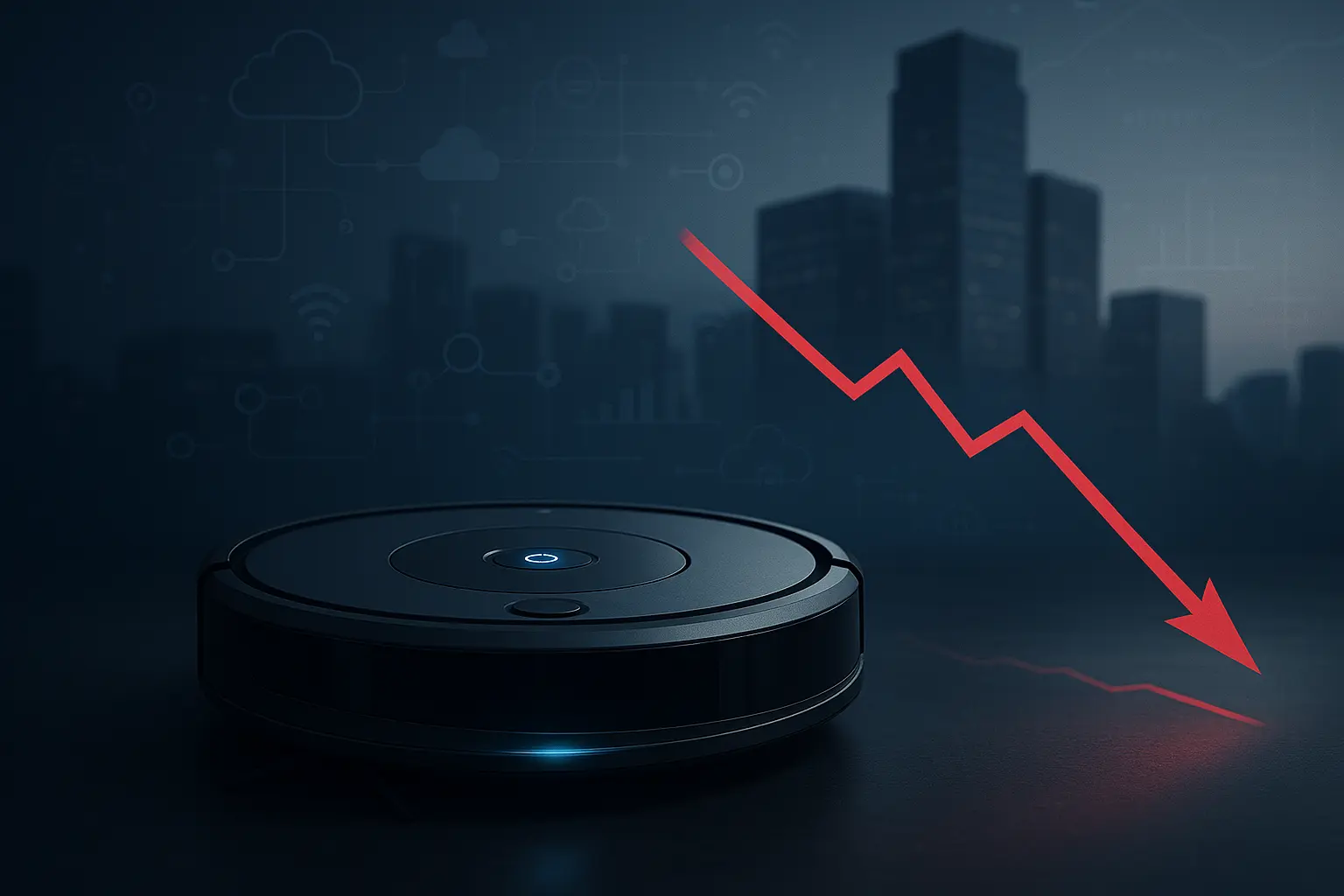
iRobot, the company that makes Roomba vacuum cleaners, recently filed for Chapter 11 bankruptcy—a move that has caused concern among both customers and investors. This decision immediately led to fears that their smart home devices, particularly the Roomba, might suddenly stop working (a process technically known as “bricking”). However, the company has assured customers that no disruption to products or app support is expected at this time and that it plans to continue services throughout the restructuring process.
Why did this happen? — The real reasons
iRobot had been facing significant financial pressure for some time: the dominance of cheaper competitor vacuum cleaners, rising manufacturing costs, and the collapse of a potential acquisition in 2024 (which was being discussed with Amazon) — all weakened the company’s financial position. Furthermore, new import taxes and supply chain disruptions increased costs, exacerbating the cash flow problems. This is why the company opted for restructuring.
Why iRobot Was Forced to Restructure
Mounting competitive pressure and rising costs steadily weakened the company’s financial foundation.
Cheap competitors flooded the market
The dominance of lower-priced robotic vacuum cleaners sharply reduced iRobot’s pricing power and market share.
Manufacturing costs kept rising
Higher production and component costs compressed margins, making profitability increasingly difficult to sustain.
Amazon deal collapse removed a lifeline
The failure of a potential Amazon acquisition in 2024 eliminated a critical financial backstop for the company.
Trade and supply chain shocks added stress
New import taxes and ongoing supply-chain disruptions pushed costs higher, intensifying cash flow strain.
Why restructuring became inevitable
With margins squeezed, cash flow deteriorating, and no acquisition rescue, restructuring emerged as the only viable option.
Trump Slams a ‘Decaying’ Europe as EU Leaders Face a Defining Week
What is the fear of ‘bricking’, and how justified is it?
When an internet-connected device relies on its manufacturer for support—such as app updates, cloud services, or firmware updates—people worry that the device could suddenly become useless (bricked) if the company goes out of business. This fear is technically understandable, but it’s not necessarily true in every case. Many older smart devices can still function locally or continue to operate with third-party support. In the case of Roomba, many basic functions run on the local hardware, but the reliance on the app and cloud features is a separate issue.
What the company said — and what it means for customers.
iRobot has publicly stated that it expects product support, app services, and firmware updates to remain uninterrupted during the process, and that the restructuring is intended to resolve liabilities while keeping the company operational. This means that most Roomba owners shouldn’t have to worry about significant changes in the short term. However, the long-term support model (including the types of updates, cloud features, and warranties) could change after the restructuring—especially if the company goes private and the equity of prior shareholders is wiped out.
Practical advice for Roomba users (steps you can take now)
- Back up your Roomba and its associated app — take screenshots of any important mapping or settings.
- If you have a warranty or service plan, keep a record of its terms and remaining duration.
- Consider saving essential files and spatial maps locally — some models offer cloud-free options.
- Please note that feature sets (such as cloud-based smart home integrations) may change in the future; however, basic cleaning functions are generally expected to remain operational.
- Keep an eye on community forums and official notices before major changes or updates, as restructuring may involve separate updates or support announcements.
iRobot’s restructuring could intensify competition in the robot vacuum market – cheaper alternatives and rapid innovation will bring more options for consumers. However, some users’ trust may be damaged, impacting brand loyalty. If the Roomba brand retains its support and the restructuring with manufacturers like Picea is successful, the company could regain stability; otherwise, a change in the long-term service model may be necessary.
Takeaway:
If you use a Roomba, there’s no need to panic yet – the company has assured that services will continue temporarily. However, be aware that the long-term support and update model may change, so it’s wise to back up your device settings and warranty information. Keep an eye on news and official announcements – and if you’re considering selling or upgrading, factor in the company’s future and service terms when making your decision.