Key Points
- UnitedHealth Group delivered a slight fourth-quarter earnings beat but issued weaker-than-expected revenue guidance for 2026.
- The parent of the nation’s largest private insurer, UnitedHealthcare, is trying to reset the business as medical costs run hotter than expected.
- UnitedHealth now expects 2026 revenue to top $439 billion, a 2% year-over-year decline tied to what it calls “right-sizing across the enterprise.”
UnitedHealth Group reported a modest earnings beat for the fourth quarter on Tuesday. Still, investors focused on softer revenue guidance as the health-care giant works through rising medical costs and a broader turnaround effort.
Here’s how the company performed compared with Wall Street expectations, based on analyst estimates from LSEG:
- Adjusted earnings per share: $2.11 vs. $2.10 expected
- Revenue: $113.2 billion vs. $113.82 billion expected
The update comes just days after UnitedHealth CEO Stephen Hemsley joined other Minnesota business leaders in signing an open letter calling for an “immediate de-escalation of tensions” in the state following the fatal shooting of U.S. citizen Alex Pretti, a 37-year-old ICU nurse, by federal immigration agents.
Profits Take a Sharp Hit
UnitedHealth posted fourth-quarter net income of $10 million, or 1 cent per share, a steep drop from $5.54 billion, or $5.98 per share, a year earlier. After excluding one-time items such as business divestitures, restructuring charges, and costs tied to a major cyberattack at its Change Healthcare unit, adjusted earnings came in at $2.11 per share.
Revenue rose from $100.81 billion in the same quarter last year.
A Turnaround in Progress
The company is leaning on a new leadership team to execute a turnaround plan aimed at restoring profitability—and repairing its reputation—after a difficult two-year stretch. The strategy includes trimming membership, raising prices, cutting certain benefits, and increasing transparency across the business.
Looking ahead, UnitedHealth said it expects 2026 revenue to exceed $439 billion, which would mark a 2% decline from 2025. The forecast falls well short of the $454.6 billion analysts had been expecting.
“It’s the first time in a decade that UnitedHealth Group has had declining revenue,” CFO Wayne DeVeydt said in an interview.
He pointed to three main reasons behind the outlook. First are recent and planned divestitures, including exits from operations in the U.K. and South America. Second is a sizable drop in U.S. membership, with more than 3 million fewer members expected in 2026.
“In the fourth quarter, we righted the ship,” DeVeydt said, noting the company’s decision to exit international markets and refocus on its U.S. businesses. “We’ve strengthened the balance sheet and repositioned the company for the kind of growth investors have historically seen.”
Nvidia Drops $2 Billion on CoreWeave—and Wall Street Is Paying Attention
Medicare Changes Add Pressure
The third factor weighing on revenue is 2026 being the final year of Medicare’s new risk-adjustment coding system, known as V28. The change has reduced payments to insurers by altering how patient diagnoses are weighted.
DeVeydt said the shift will result in a $6 billion revenue hit for UnitedHealth in 2026. About $2 billion of that impact will fall on its insurance arm, UnitedHealthcare, with the remainder affecting the company’s Optum health-care division.
Shares Slide on Medicare Payment Concerns
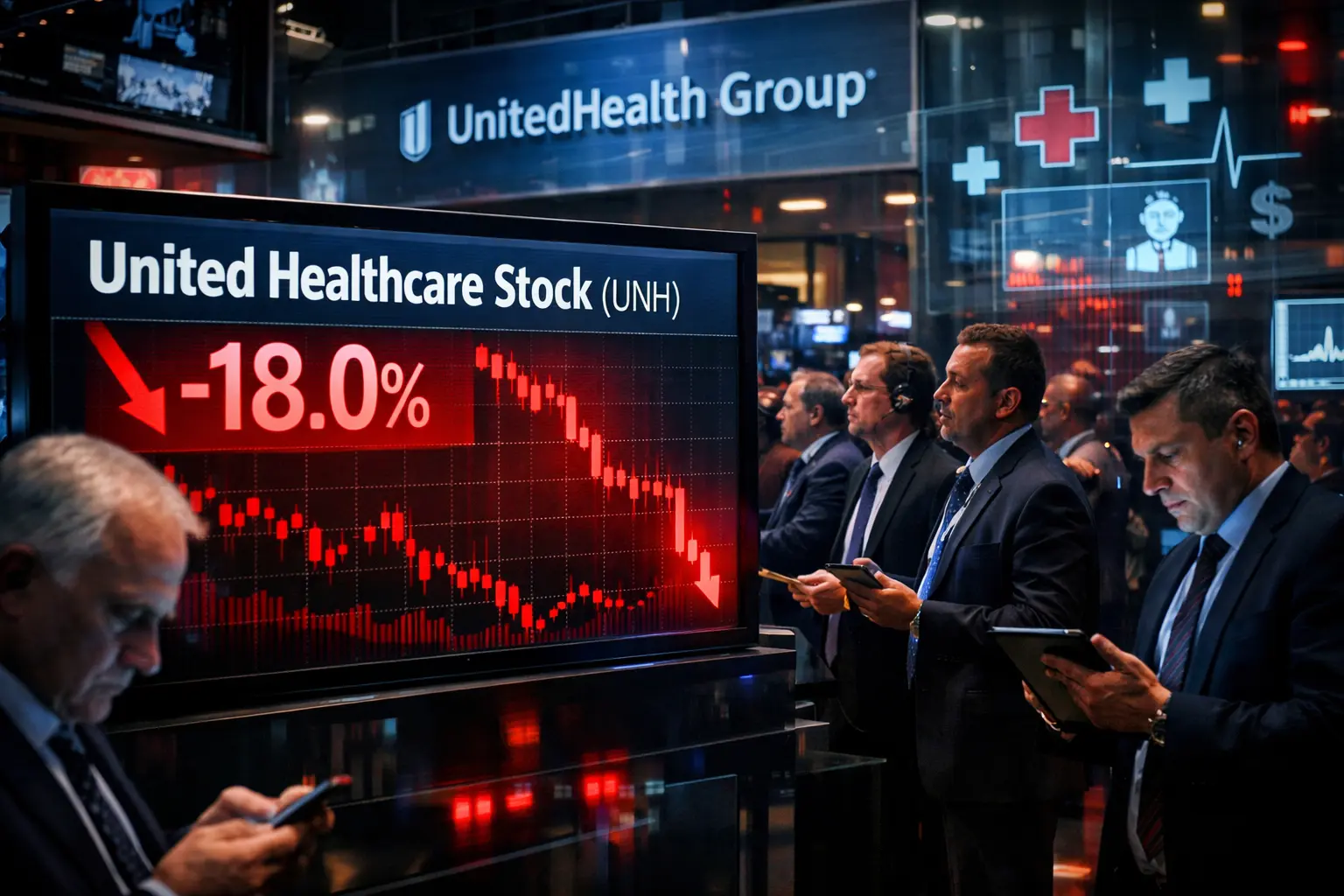
On Monday, shares of UnitedHealth and other major insurers tumbled after the Centers for Medicare & Medicaid Services proposed nearly flat payment rates for Medicare Advantage, the privately run program that now covers more than half of all Medicare beneficiaries.
Those rates play a critical role in determining monthly premiums, plan benefits, and ultimately insurers’ profit margins.
Medical costs tied to Medicare Advantage have climbed over the past two years as more seniors return to hospitals for procedures delayed during the pandemic, including hip and knee replacements. DeVeydt said costs in the fourth quarter remained “elevated and high,” but did not exceed expectations.
For 2026, UnitedHealth expects its insurance segment’s medical benefit ratio—a key measure of how much premium revenue is spent on medical care—to land at 88.8%, plus or minus 50 basis points. That would mark an improvement from 89.1% in 2025, with a lower ratio typically signaling better profitability.