Key Points
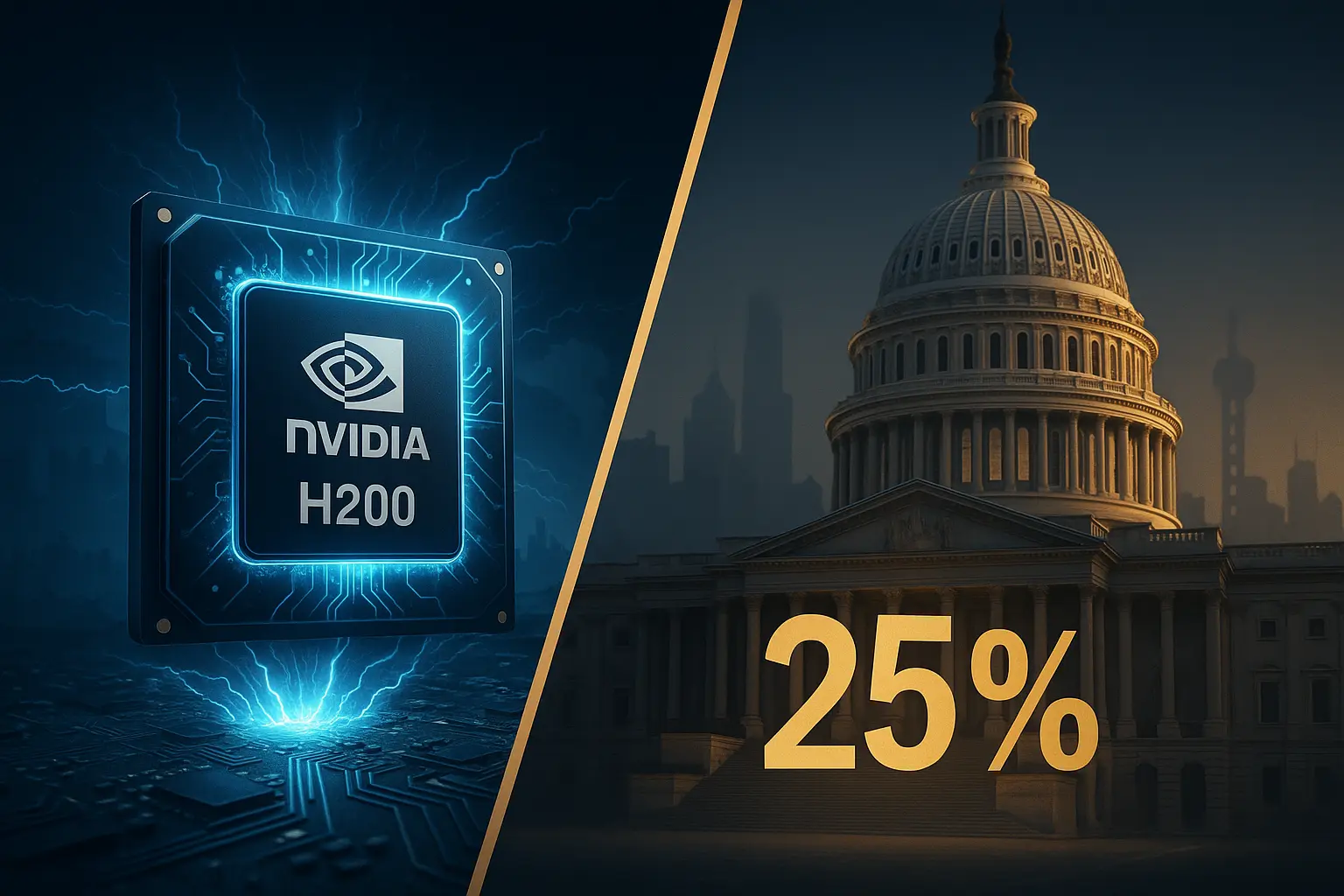
- President Donald Trump said the U.S. will allow Nvidia to ship its H200 AI chips to “approved customers” in China and other countries.
- Chinese President Xi Jinping “responded positively,” according to Trump.
- Under the plan, 25% of chip sales will be paid to the U.S. government.
President Donald Trump announced Monday that Nvidia will be allowed to export its high-performance H200 artificial intelligence chips to “approved customers” in China and beyond — but only if the U.S. government gets a 25% share of the revenue.
Trump said Chinese President Xi Jinping “responded positively” to the proposal, according to a Truth Social post.
The policy, he wrote, “will support American jobs, strengthen U.S. manufacturing, and benefit American taxpayers.” Trump added that the Department of Commerce is finalizing the details, and said the same rules will also apply to AMD, Intel, and other U.S. chipmakers.
This comes after Nvidia and AMD agreed in August to share 15% of revenue from China chip sales with the U.S. government. At the same time, China reportedly warned its companies not to use Nvidia’s H20 chip — a model designed specifically for the Chinese market under U.S. export rules.
The H200 is a more advanced chip than the H20, though it’s not Nvidia’s top-tier product.
Nvidia Stock Reaction
Shares of Nvidia climbed earlier Monday after reports that Commerce was set to approve China shipments, although some gains faded later in the day. The stock still finished up about 2% in after-hours trading.
A Nvidia spokesperson told CNBC the company supports the move:
“We applaud President Trump’s decision to allow America’s chip industry to compete to support high-paying jobs and manufacturing in America. Offering H200 to approved commercial customers, vetted by the Department of Commerce, strikes a thoughtful balance that is great for America.”
Chips at the Center of U.S.–China Tensions
Semiconductors power everything from smartphones to advanced AI systems, making them a crucial battleground in the tech rivalry between Washington and Beijing. They’ve also been a flashpoint in the broader trade tensions between the two economic superpowers.
China previously imposed export controls on rare-earth minerals used in chip production. In response, the Trump administration threatened steep tariff hikes on Chinese imports.
But after a meeting in South Korea in late October, Trump and Xi reached a tentative truce in which China pledged to stop “retaliation” against U.S. chipmakers, according to the White House. Trump said Nvidia chip exports were a key topic in those discussions.