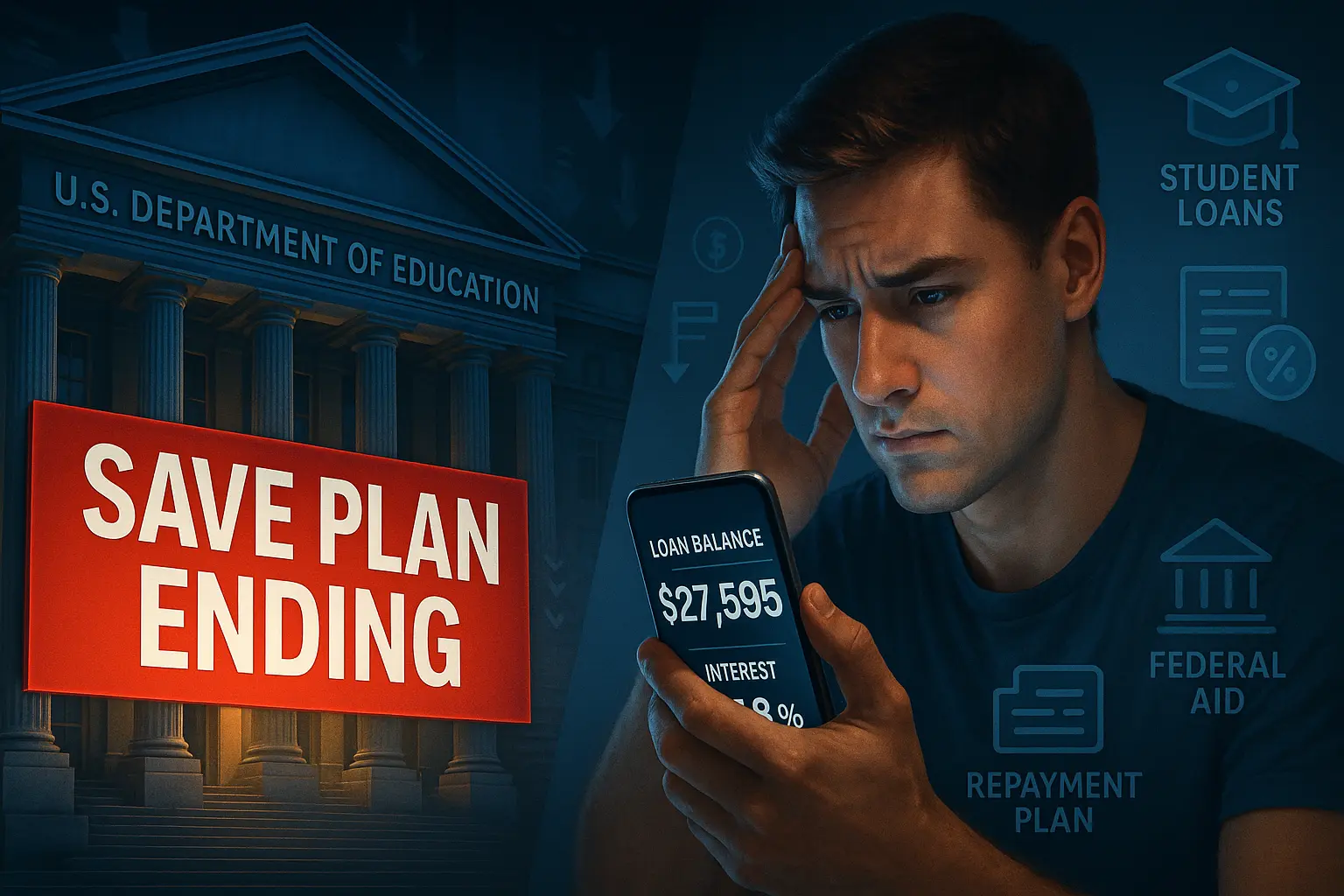
In a major shift that could disrupt repayment plans for millions of borrowers, the Trump administration on Tuesday announced an agreement to terminate the SAVE student loan repayment program — a signature Biden-era initiative that has been tied up in legal battles since its launch.
The Saving on Valuable Education (SAVE) plan, introduced in 2023, was designed as an income-driven repayment option aimed at reducing payment burdens for low-income borrowers. It capped monthly bills based on income and family size, prevented unpaid interest from piling up, and offered faster paths to forgiveness for qualifying borrowers.
The Trump administration has repeatedly argued that the program was unlawful and pushed for its elimination.
According to a Department of Education news release, the proposed legal settlement calls for:
- Blocking all new enrollments into SAVE
- Denying all pending applications
- Transferring current SAVE borrowers into other legally authorized repayment plans
If approved by the court, the agreement would formally end the SAVE plan. Borrowers would have a “limited time” — a period not yet specified — to choose a new repayment option, with the Office of Federal Student Aid expected to help guide the transition.
The settlement resolves a lawsuit filed in April 2024 by Missouri, one of seven Republican-led states that challenged the legality of the plan.
Administration Defends Move, Critics Warn of Higher Costs
Under Secretary of Education Nicholas Kent said the Biden administration had attempted to “unlawfully shift student loan debt onto American taxpayers,” calling the termination of SAVE a necessary correction.
But consumer advocates immediately raised concerns.
Abby Shafroth of the National Consumer Law Center warned the move would “rip away” an affordable option for borrowers during a period of financial instability, increasing confusion and stress for millions already dealing with rising living costs.
Borrowers Already Feeling Pressure as Interest Resumes
The settlement comes just months after the Education Department began reapplying interest to loans held by SAVE borrowers — a change affecting nearly 8 million people. Although payments remained paused under forbearance, many borrowers saw their balances grow each month as interest restarted.
The broader student loan system has also been rapidly reshaped during President Donald Trump’s second term. His sweeping “One Big Beautiful Bill Act” — a tax and spending package passed earlier this year — introduced major changes, including:
- Caps on federal borrowing for graduate students
- New limits on how much parents can borrow for their children’s education
- The elimination of certain deferment options
- A far narrower set of repayment plans
Courts Previously Questioned SAVE’s Legality
The SAVE program had already been partially halted by rulings from federal judges in Kansas and Missouri in 2024. Those courts found that the Biden administration exceeded its authority by creating generous relief measures without congressional approval. Following those decisions, SAVE borrowers were placed into no-interest forbearance.
With the new settlement agreement, the program’s future appears sealed — and millions of borrowers will soon need to navigate yet another shift in an already volatile student loan landscape.