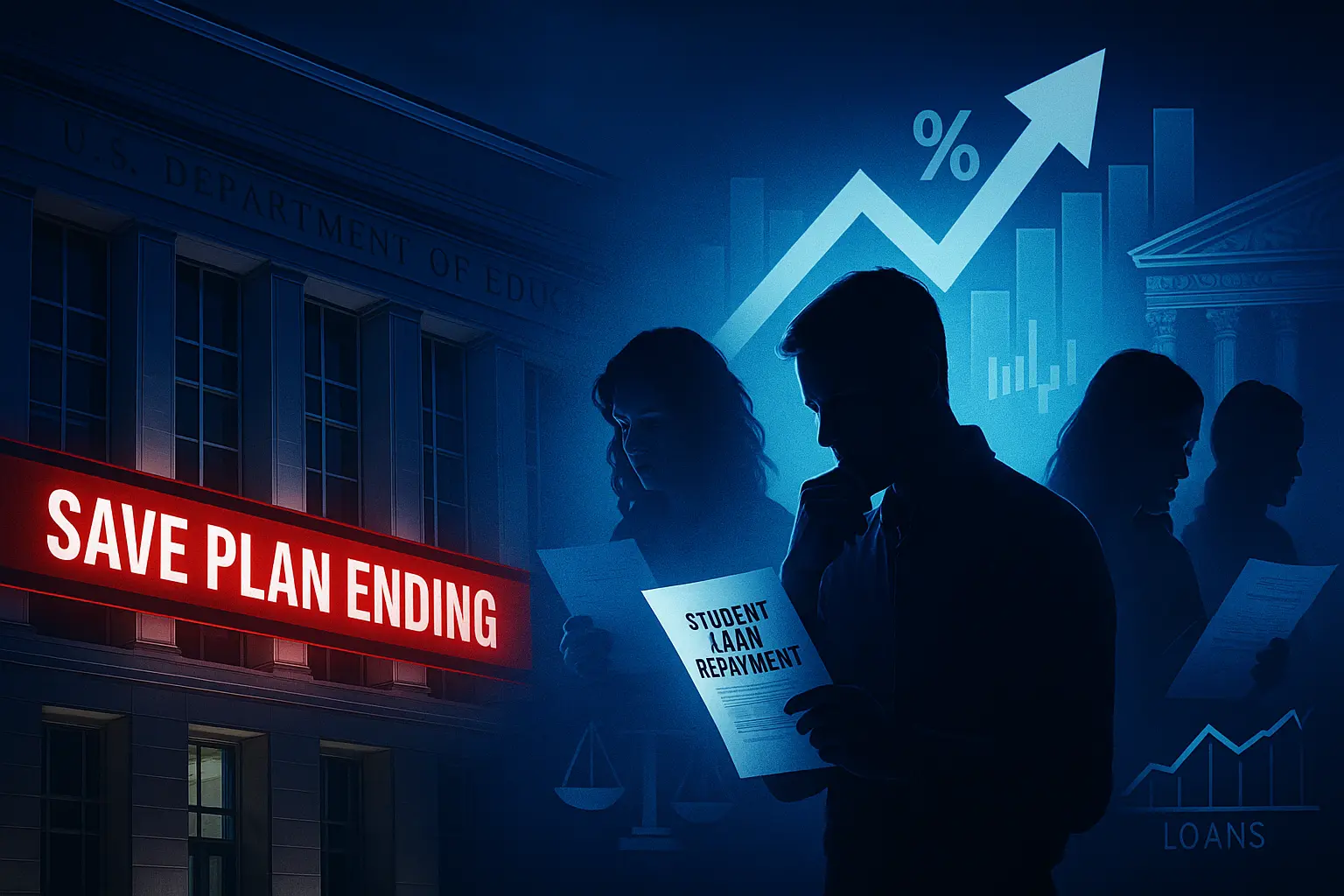
Latest Situation (Student Loan Repayment)— The Trump administration has announced an agreement to terminate the Biden-era SAVE program, which will halt new enrollments, de-register pending applications, and transition current SAVE participants to legitimate alternatives. This agreement was reached with the state of Missouri and is subject to court approval.
The SAVE (Saving on a Valuable Education) plan was introduced by the Biden administration to ease the burden on low-income borrowers. It had monthly payments based on income and family size and, in some cases, provided for early forgiveness. The SAVE plan provided affordable options for millions of borrowers, so the impact of its termination is expected to be widespread.
What Happens if the SAVE Plan Is Shut Down
Simple Impact: If the agreement is approved by the court, new enrollments will cease, and those currently under the SAVE plan will be asked to transition to other “legal” repayment options. This could mean many people’s monthly installments change or interest calculations restart, as mandated. An estimated 7.5 million borrowers could be directly affected.
This news is significant because student loans are a major financial responsibility for many American households in today’s environment. If the SAVE plan is discontinued, those who previously made lower payments through it will now be forced to switch to other student loan repayment plans—and in some cases, their monthly burden could increase. This is expected to impact default rates, credit scores, and household spending.
Policy and Political Perspectives: The Trump administration argues that the SAVE plan exceeded the Secretary’s jurisdiction and therefore needs to be terminated; critics say it will harm low-income borrowers the most. Both legal battles and political debates will continue on this issue, as it represents a major change in education and loan policies.
What you can do (if you are the borrower) – practical tips:
- Contact your loan servicer immediately to find out your status—whether your account is currently on SAVE or whether you’re being transferred.
- Reevaluate your budget and plan accordingly for potential increased monthly installments.
- Find out about available legitimate income-driven options and other student loan repayment plans (such as PAYE, REPAYE, or other prescribed plans).
- If you believe you’re eligible, prioritize updates on government websites and official notices—as many procedures are currently subject to court and agency directives. (These recommendations are intended as general guidance; consult a professional for specific legal or financial advice.)
Importantly, such large-scale changes often come with a transition period and clear guidelines—so keep documents handy, carefully read servicer emails, and screenshot/print any notices. (If you’re a non-citizen or repaying U.S. student loans while living abroad, your situation may be different—get specific guidance from your loan servicer.)
Conclusion: This decision marks a major turning point in student loan policy. Those who relied on the SAVE plan will now have to look for alternative student loan repayment plans, and the policy change could impact not only personal budgets but also national economic indicators. If you’re a borrower, monitor your loan servicer and official Department of Education updates and take timely action.