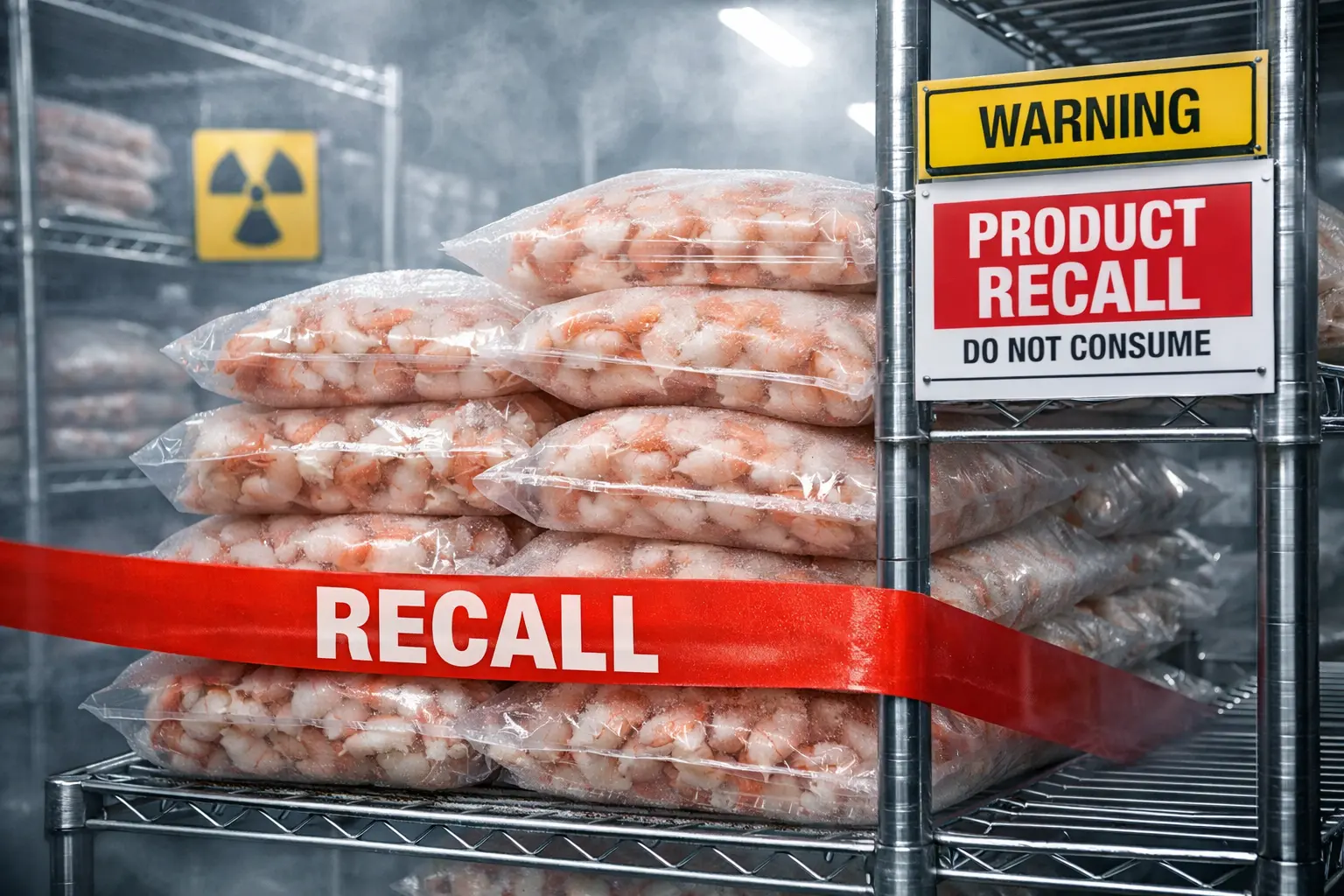
A large quantity of frozen shrimp (approximately 83,800 bags) has been recalled due to safety concerns. This action was taken because some samples or containers showed suspected traces of a radioactive isotope called cesium-137; therefore, this is a precautionary measure to ensure consumer safety. The FDA and the company have advised consumers not to consume the affected packages and to return or dispose of them.
The most important things are simple words.
- This situation is a type of shrimp recall—meaning that packages suspected of being contaminated are being recalled from the market. It falls under the category of a frozen shrimp recall because the affected products were frozen.
- Companies have indicated that the problem originated with imported shrimp (imported from Indonesia), so this issue is not limited to just one brand—several private-label brands have been affected.
What does it mean to be radioactive?
Cesium-137 is a man-made radioisotope; even in small quantities, it can be detected above natural background levels. Once a radioisotope enters the food chain, the health risks associated with its consumption can increase over time due to repeated exposure (e.g., increased risk of cancer) – therefore, regulatory bodies remain vigilant and take necessary precautions. While the likelihood of immediately developing a serious illness from a single meal is generally low, caution is still necessary.
Practical advice for consumers (what you should do)
- If you have a package of the same brand/best-by date that is on the recall list, do not use it immediately—return it or discard it. This is the simplest and safest solution to the shrimp recall.
- Check your receipt and batch/lot numbers: The company or store often publishes lot numbers and UPCs—compare them. This is the fastest way to identify recalled frozen shrimp.
- If you recently consumed the product and have health concerns, contact your doctor; however, keep in mind that serious effects from a single, small serving are uncommon.
What Regulators and the Industry Are Doing
The FDA issued a public warning alongside the company’s announcement, and investigations into the affected shipments are ongoing. Retail chains and suppliers have begun removing the affected products. This is a standard procedure—first, a precautionary recall and testing, followed by a more thorough investigation and container-level inspection if necessary. In such cases, the entire supply chain is examined to identify the source and prevent future occurrences.
Impact on the Market and Consumer Confidence
Such incidents lead to seafood recalls at the local and national levels, and consumers may feel unsafe. However, a one-time or limited batch shrimp recall will not cause long-term damage to the entire sector if the investigation is transparent and swift. Quick action and effective customer communication are also crucial for businesses.
In short (short takeaways)
- This is a precautionary shrimp recall – safety is our top priority.
- Do not consume the affected packages; return or dispose of them.
- Consult a doctor if you have health concerns, but a single serving is generally unlikely to pose an immediate serious risk.
The decades-old appliance chain has closed down and filed for Chapter 11 bankruptcy.