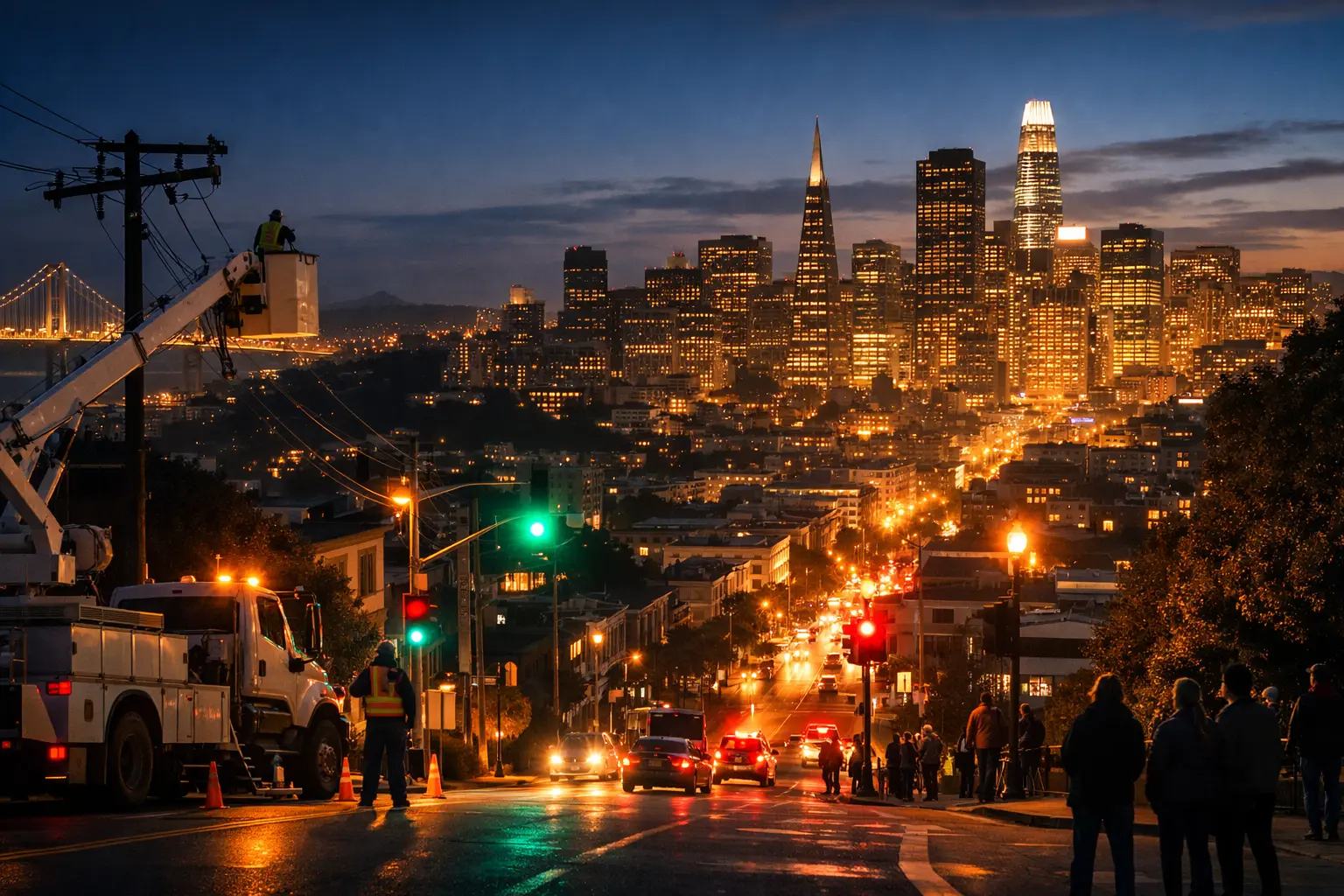
Power has been restored to most of San Francisco after a massive power outage. This is a brief and helpful roundup of the recent SF power outage that affected many parts of the city. The incident left approximately 130,000 PG&E customers without power — roughly 30% of the city — before power was restored to most areas.
Background and Cause of the Incident: Initial reports indicated the outage was caused by a fire at a substation located near 8th and Mission Streets. PG&E and the city’s fire department responded to the scene, and restoration efforts were accelerated after the fire was extinguished. Large-scale San Francisco power outages like this affect the transmission network and local distribution, so the recovery process takes time.
What Caused the San Francisco Power Outage?
Early reports point to a fire incident at a major substation — prompting an emergency response and a complex restoration effort.
What authorities reported
Initial updates indicated that the outage was triggered by a fire at a PG&E substation located near 8th and Mission Streets. Both PG&E teams and the city’s fire department responded to the scene to contain the situation.
How it affected the grid
Large-scale outages of this nature impact both the transmission network and local power distribution, which means restoration requires a staged and carefully monitored process to safely bring areas back online.
Restoration response
Restoration efforts accelerated significantly after the fire was extinguished, allowing PG&E teams to begin stabilizing affected infrastructure and restoring power to impacted neighborhoods.
Areas Affected and Impact on Daily Life: According to reports, affected areas included Richmond, Sunset, Haight Ashbury, Hayes Valley, Forest Hill, Golden Gate Park, the Presidio, and parts of downtown — impacting traffic signals, public transportation, and businesses. Several automated services were also disrupted during the power outage in San Francisco; for example, Waymo temporarily suspended its services for safety reasons because many intersections had non-functioning traffic signals. This also led to some automated vehicles becoming stuck.
Restoration Process and Current Status: PG&E teams quickly began restoration efforts, and a large number of customers were reconnected by evening — reports indicated that power had been restored to approximately 90,000 customers by nightfall, with work continuing overnight in remaining areas. Local officials stated that restoration in some areas could be completed within the next few hours. If you are still affected, continue to check PG&E’s official outage map and company updates. Safety and Public Advisory: During large San Francisco power outages, please observe the following: (1) Treat intersections with non-functioning traffic signals as four-way stops, (2) Avoid non-essential travel, (3) Keep essential medications and a mobile power bank handy, (4) Use gas appliances and generators properly to avoid carbon monoxide hazards. City emergency management teams have issued similar advice and recommend following local news channels and the official X/PG&E page for updates.
PG&E Restoration Status and Important Public Safety Guidance
Large portions of affected neighborhoods have already seen power restored, while crews continue working through remaining outage zones — with local officials urging residents to follow safety precautions.
Restoration progress
PG&E teams moved quickly to restore service, reconnecting a significant share of affected customers by evening. Reports indicated that power had been restored to approximately 90,000 customers by nightfall, with work continuing overnight to address remaining outages.
What happens next
Local officials said restoration in some areas could be completed within hours. Residents who remain without service are encouraged to regularly check PG&E’s official outage map and company update channels for location-specific timelines.
Public safety advisory
During major San Francisco power outages, authorities advise residents to:
• Treat intersections with non-functioning traffic lights as four-way stops
• Avoid non-essential travel
• Keep essential medications and a charged power bank ready
• Use gas appliances and generators safely to prevent carbon monoxide hazards
City emergency teams recommend following local news, PG&E’s official channels, and verified X updates for ongoing information.
Is this unusual, and what to expect next: While substation issues or fires are not unheard of in the city, large outages linked to this same facility have been recorded in the past. PG&E and city agencies are currently investigating whether this was a technical malfunction or if the fire was caused by something else. Discussions and investments in grid resilience and substation security are expected in the future to mitigate such San Francisco power outages.
In conclusion—what to do: If you are in San Francisco and were affected, first check the PG&E outage map for your area and official updates from local emergency information services. Monitor Muni/BART and local media (such as SFGate) for updates on travel and public transportation. This power outage in San Francisco highlights the city’s reliance on critical infrastructure, and staying informed is the most important safety measure during such events.
After being fired by the publisher, David Williams denied the allegations of misconduct.