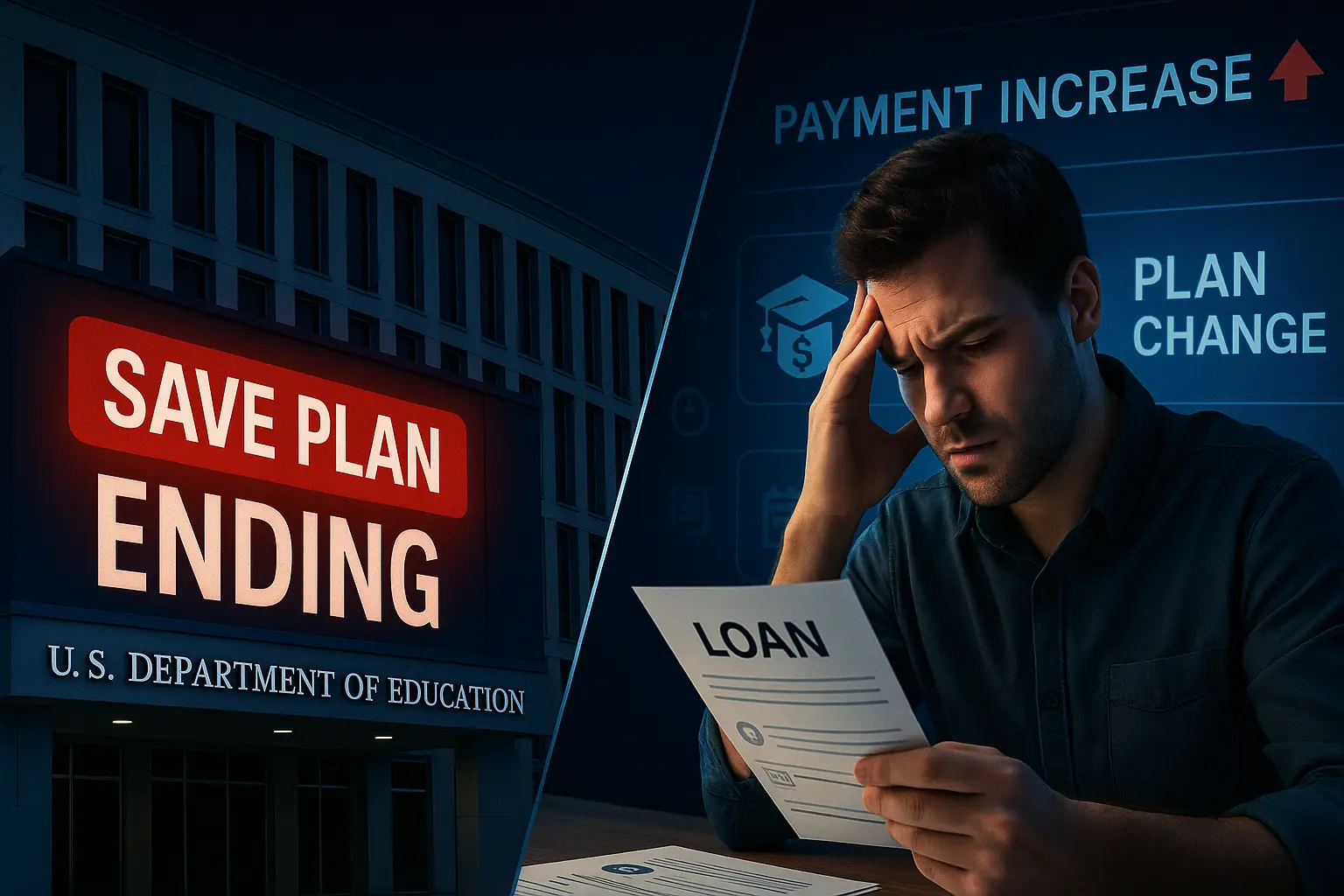
The U.S. Department of Education announced on Tuesday that it has reached a proposed settlement agreement that would officially terminate one of the most popular — and hotly debated — Biden-era student loan repayment programs.
The Saving on a Valuable Education plan, widely known as SAVE, was the most generous income-driven repayment option on the market. It offered fast-track loan forgiveness and monthly bills as low as $0 for low-income borrowers. But Republican attorneys general, led by Missouri, challenged the plan in court, arguing the program went far beyond what the federal government is legally allowed to offer.
For months, millions of SAVE borrowers have been stuck in limbo. While lawsuits played out, they weren’t required to make payments — even after years of pandemic-era pauses. But interest started building again in August, adding pressure to an already messy situation.
Under Secretary of Education Nicholas Kent framed the settlement as a win for taxpayers.
“The law is clear: if you take out a loan, you must pay it back,” Kent said. He added that thanks to states challenging the program, Americans “will no longer be forced to serve as collateral for illegal and irresponsible student loan policies.”
SAVE Plan Will Be Shut Down Under Proposed Agreement
If approved by the court, the settlement would effectively end the SAVE program. The Education Department agreed to:
- Stop enrolling new borrowers in SAVE.
- Deny all pending SAVE applications.
- Move roughly 7 million borrowers still in the plan into other repayment options — though some of those programs are also being redesigned.
Borrowers will have only a limited window to choose a new plan. The Department says they must pick between:
- Fixed-payment plans, or
- Income-based plans that adjust payments based on earnings.
Two new repayment plans created under Republicans’ One Big Beautiful Bill Act (OBBBA) — a redesigned standard plan and a new income-driven option called the Repayment Assistance Plan — will launch in July 2026. But SAVE borrowers will be required to move off their current plan well before then.
SAVE was already set to expire by July 1, 2028, under OBBBA rules. Tuesday’s proposal speeds up that timeline significantly, though officials haven’t said exactly when the transition will begin.
Loan Servicers Brace for Chaos
Moving millions of borrowers at once could overwhelm loan servicers already struggling with call volumes and staffing shortages.
“It’s gonna be bumpy,” warned Scott Buchanan, head of the Student Loan Servicing Alliance.
He noted that SAVE borrowers haven’t made payments in years and will need extensive support to navigate the system again.
The settlement comes as borrowers nationwide face growing financial strain.
Millions Risk Default as Payments Rise
“We are sitting on the precipice of millions of borrowers defaulting on their loans,” said Persis Yu of Protect Borrowers.
She criticized the Education Department for surrendering to state attorneys general rather than defending a plan she says kept payments affordable.
Fresh data from the American Enterprise Institute (AEI) paints a troubling picture:
- 5.5 million borrowers are already in default.
- 3.7 million are more than 270 days late — essentially one step from default.
- 2.7 million are in earlier stages of delinquency.
In total, 12 million borrowers are significantly behind, underscoring the precarious state of the student loan landscape.