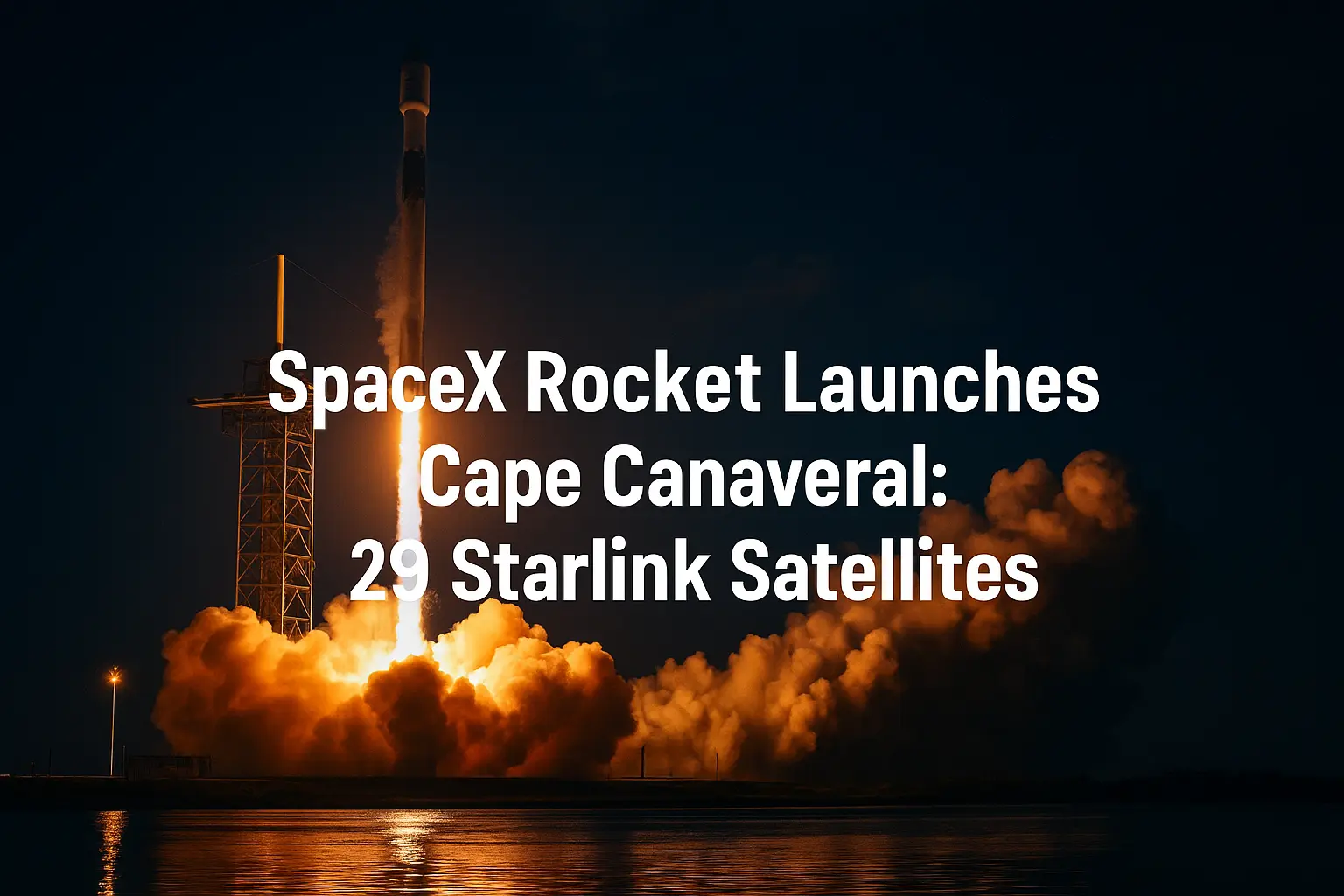
SpaceX recently successfully launched 29 Starlink satellites into orbit from LC-39A at NASA’s Kennedy Space Center (Florida) aboard a Falcon 9 rocket. This launch is not a one-off but a continuation of the company’s ongoing expansion of the Starlink global broadband network. Rocket launches have become commonplace in the Cape Canaveral region, and this mission was part of that trend.
What happened and why it matters
The rocket lofted 29 new Starlink satellites into high-priority low Earth orbit — ultimately aimed at reducing residual ping-time and expanding net coverage. The Falcon 9’s first stage attempted a landing on a droneship, with plans to return to Earth after the mission, furthering SpaceX’s reusability strategy. The frequency of these missions is made possible by rocket launches from Cape Canaveral: the Cape’s launch pad and supporting infrastructure have allowed SpaceX to achieve a fast turnaround.
What is Starlink – in simple terms
Starlink is a satellite-based internet service that aims to bring fast, low-latency broadband to parts of the world where traditional cable/fiber isn’t available. Each new batch adds more connectivity to the constellation — increasing the potential for better internet access for farmers, remote residents, shipping, and air travel. The frequent rocket launches from Cape Canaveral indicate that SpaceX is rapidly expanding its network.
Falcon 9 and Technical Points (In Simple Way)
The Falcon 9 is considered unique because its first stage is reusable – this is why SpaceX is able to operate frequent missions at low cost. The history of the booster used in this mission (first flight or multiple use) is recorded in the mission register – this shows how mature reused rocket technology is becoming. Successful landings of these reusable boosters at the rocket launch site at Cape Canaveral have contributed significantly to reducing operational costs.
Its impact on the industry (explained simply)
Starlink’s expansion will put pressure on the consumer-internet market: traditional ISPs, satellite competitors (such as Amazon Kuiper, OneWeb), and geographically limited service areas—all will have to deal with new competition. This is why regular rocket launches from places like Cape Canaveral signal visionary planning and investment. At the consumer level, this could mean: better rural broadband options, faster connections, and new business opportunities (telemedicine, remote education, maritime connectivity).
Quick takeaways for readers
- Launch site: NASA’s Kennedy Space Center, LC-39A. Rocket launches from Cape Canaveral.
- Vehicle: SpaceX Falcon 9 — 29 Starlink satellites.
- Goal: Expanding the Starlink constellation into low Earth orbit. Rocket launches from Cape Canaveral.
- Reusability: Falcon 9’s first stage followed the planned post-mission landing — reusability is ongoing. Rocket launches from Cape Canaveral.
(The above facts are confirmed by SpaceX and independent news reports.)
If you read tech and broadband news for a U.S. audience, it’s important to understand that SpaceX’s frequent launches—especially those from Cape Canaveral—aren’t just for show. There’s a bigger picture behind them. Each launch is a step toward expanding internet access worldwide, improving its quality, and strengthening the digital infrastructure of the future.
So, the next time you see a new mission take off from Cape Canaveral, don’t just see it as another rocket liftoff. Satellite internet prices, speeds, availability, and competition among companies all have implications. This means that such rocket launches from Cape Canaveral have the potential to change the course of the internet in the future.