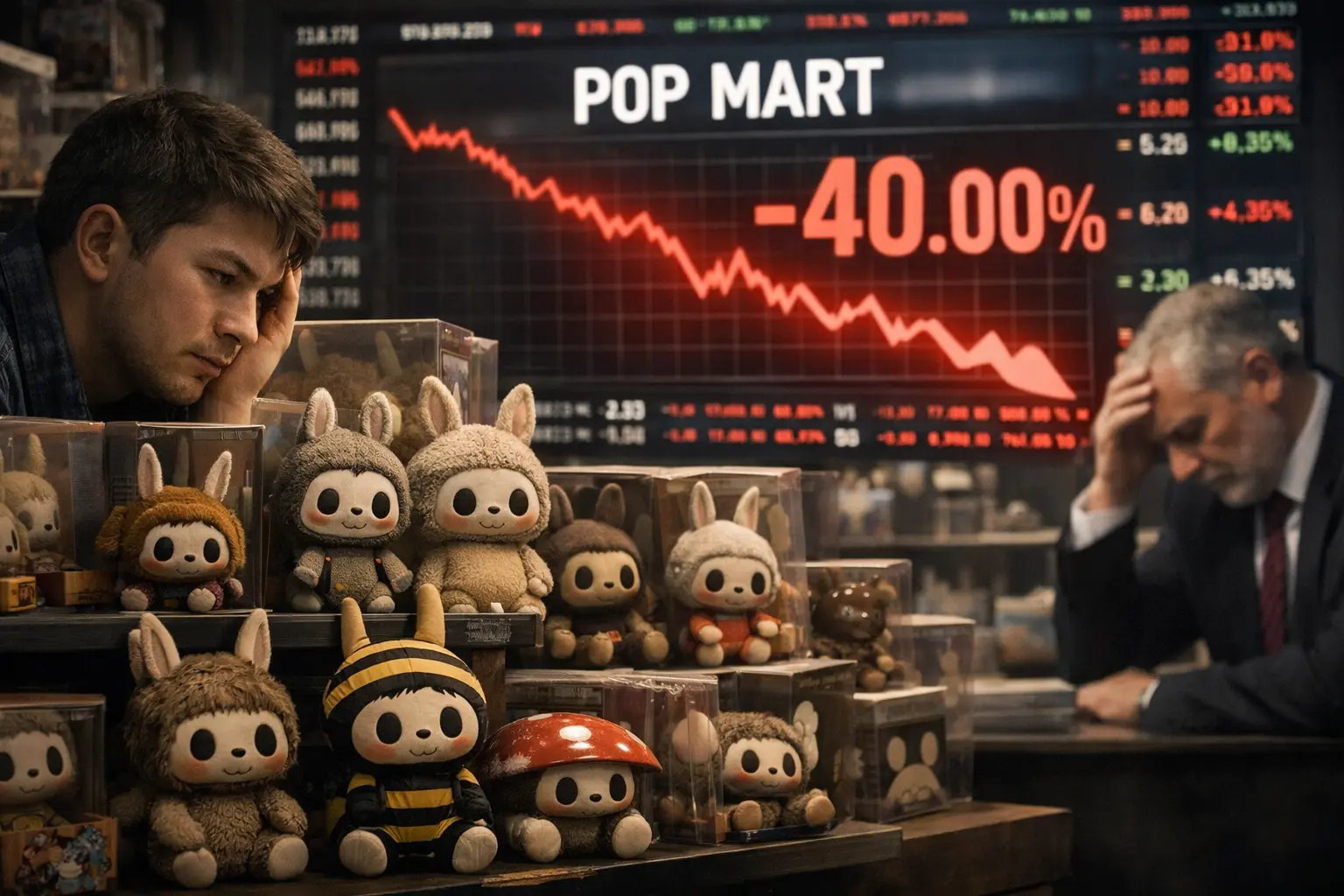
The Labubu craze appears to be fading rapidly — a nearly 40% drop in Pop Mart’s stock price has shocked both collectors and investors. The initial wave of Labubu popularity — fueled by social media hype, limited editions, and “blind box” sales — quickly captured attention, but now those same factors seem to be backfiring in some respects.
First, it’s important to understand why Labubu became popular. Small, designer plush toys and figures — often referred to as “designer toys” or “collectibles” — quickly gained traction among Gen-Z and collectible communities. Pop Mart leveraged the blind-box format, limited drops, and social-first marketing to make Labubu go viral — creating a thriving resale market and collector hubs. Several reports indicate that Labubu significantly contributed to Pop Mart’s growth.
So why the decline? Simply put — fashion fatigue and market dynamics. When any collectible brand grows too quickly, it floods the market with supply; the exclusivity diminishes when the same designs appear repeatedly. This, combined with increased government scrutiny and consumer criticism of the blind-box model, has dampened impulsive buying. Some reports suggest that certain Labubu series are now selling below retail price on the secondary market, eroding collector confidence.
Collector perspective — those who were collecting Labubu are now concerned. Many buyers have reported difficulties distinguishing between genuine and counterfeit items, and cheap fakes are flooding the market — further damaging trust. The influx of counterfeit goods has also raised safety and quality concerns in some countries. Those who were buying with an investment motive have lowered their profit expectations.
Investor impact — Pop Mart’s share price has plummeted by nearly 40% in the last few months, resulting in a significant decrease in the company’s market value. Investors are now questioning whether this is merely a correction (a fad-driven dip that will rebound) or a structural slowdown—meaning the brand’s collector focus proved temporary and long-term growth will be slower. Several analysts are drawing comparisons to past collectible booms like Beanie Babies.
Pop Mart’s Market Value Has Been Hit Hard — Now Investors Want Answers
A steep share price decline has forced investors to decide whether this is a temporary correction — or the start of a deeper structural slowdown.
Share price collapse
Pop Mart’s stock has plummeted nearly 40% over the past few months, wiping out a significant portion of the company’s market value.
What investors are debating
Some believe this could be a correction driven by fading hype — and potentially reversible. Others fear it signals a structural slowdown, where collector enthusiasm may have peaked.
Historical comparisons
Analysts are increasingly comparing the situation to past collectible booms — including Beanie Babies–style hype cycles — where short-term excitement eventually gave way to slower, more limited growth.
What options does Pop Mart have? The company is currently exploring avenues such as global retail expansion (flagship stores), new IP ventures (film/entertainment collaborations), and legal action to combat the counterfeit market. Some reports suggest that brand diversification and active IP monetization are the only ways to restore confidence in the long term—but these are neither easy nor quick solutions.
Practical advice for US readers (that will be immediately useful to you):
- If you’re considering buying, verify the authenticity — check for official retailers, serial/QR codes, and packaging. (Keyword: Pop Mart collectibles, authentic Labubu)
- Check resale market prices; if secondary market prices are consistently below retail, it’s a sign that the hype is fading. (Keyword: resale value, blind box market)
- View it from an investment perspective — fluctuations are common in designer toys; rely on long-term brand value and the company’s diversification strategy. (Keyword: collector market, investor risk)
Conclusion: Labubu created a significant wave in pop culture and opened up a new market for Pop Mart, but its shine now seems to be fading due to fashion fatigue, oversupply, counterfeit products, and policy sensitivities. It would be premature to declare its demise entirely—but it’s clear that the brand and the company now need smart strategies to regain trust and value. If you’re a collector, proceed with caution; if you’re an investor, keep a close eye on the company’s next moves and global sales data.