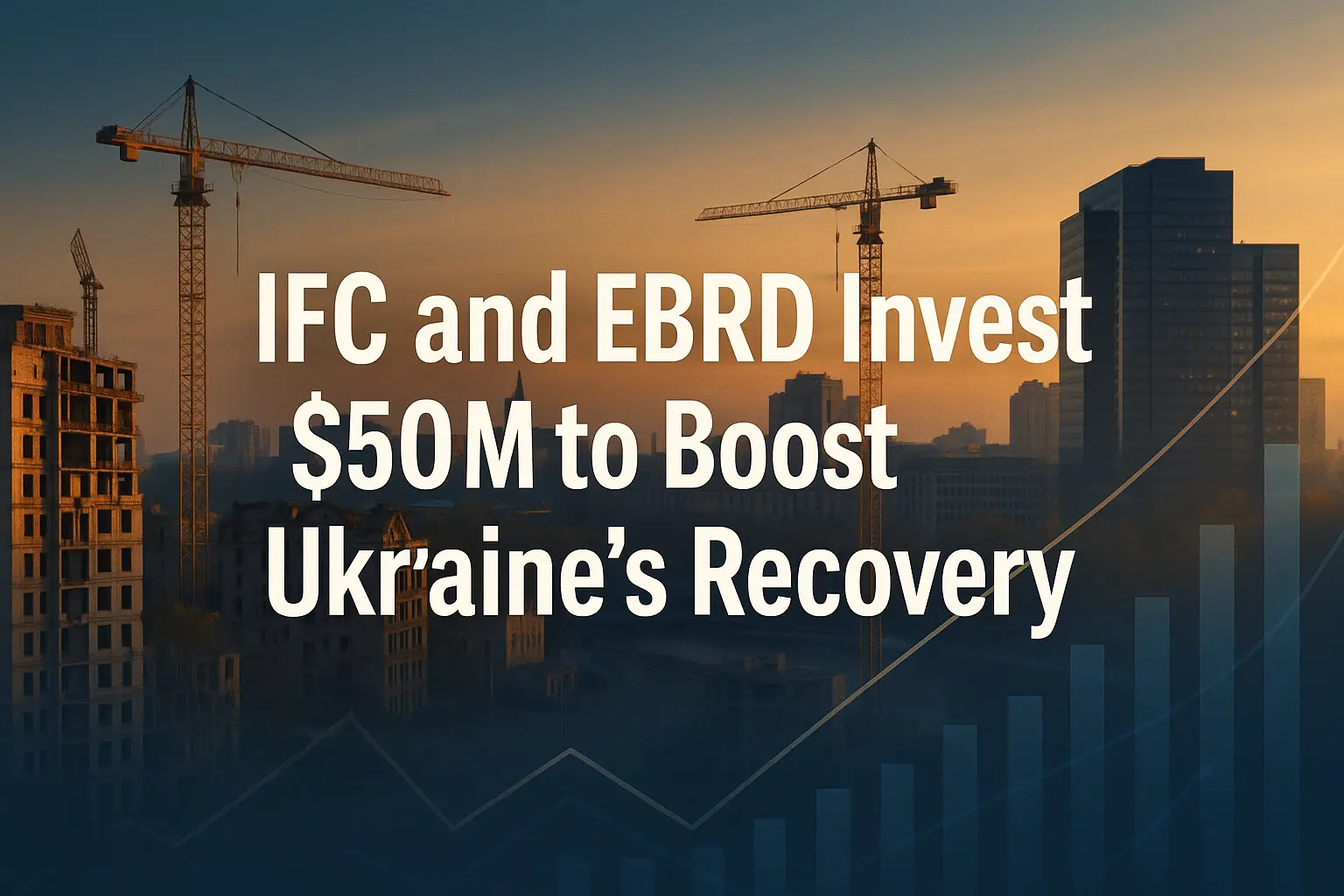
The IFC and EBRD have jointly invested $50 million to support Ukraine’s reconstruction efforts—each institution contributing approximately $25 million. The investment is in Dragon Capital’s Rebuild Ukraine Fund, which aims to empower war-affected Ukrainian businesses and mid-sized companies (mid-cap) and small and medium-sized businesses (SMEs) through equity and quasi-equity.
The fund will focus specifically on sectors that directly contribute to the country’s economic recovery and job creation—consumer services, healthcare, financial services, and businesses that can sustain local supply chains. The fund is managed by Dragon Capital, and its primary objective is to make Ukraine’s economy self-reliant by increasing private-sector investments.
It’s worth noting that such investments aren’t just capital injections—they also send a signal that international financial institutions have confidence in Ukraine’s long-term economic recovery. For example, IFC’s investment is linked to European guarantee mechanisms, which help mitigate investment risks and increase the likelihood of attracting additional private capital.
The involvement of multilateral development banks like the IFC and the EBRD also means that projects are more likely to receive technical assistance, governance reforms, and transparency standards—so that investment impacts are long-term and measurable. If the right actions are chosen promptly, supporting small businesses through both loans and equity can create local jobs and increase income flows.
Impact on Ukraine
On the other hand, this move by the IFC is considered significant for Ukraine, as it will provide some support to the private investment environment there. This support could allow mid-sized companies to expand and grow, and also strengthen investor confidence. The Rebuild Ukraine Fund aims to gradually build a substantial capital reserve so that it can invest in needed projects that will help revive the country’s economy in the future.
In this context, the EBRD’s increased commitments to Ukraine over the past few years are also significant—the EBRD has provided billions of euros in financing to Ukraine in recent years, with a particular focus on energy and infrastructure. At a time when war and immediate security concerns persist, this financial support from external institutions is crucial to sustaining the everyday economy.
Benefits and Challenges — Clearly, these investments offer immediate liquidity and growth opportunities, but challenges also exist: wartime risks, project sustainability, transparent use of funds, and ensuring long-term returns. If disbursement and monitoring are accompanied by strong governance, these funds can deliver positive results for local supply chains and employment; otherwise, results may not meet expectations.
IFC–EBRD Initiative
Ultimately, this joint initiative between the IFC and the EBRD is not just financial assistance, but also a political and economic message – a signal to the global investor community that opportunities exist in Ukraine for long-term reform and private sector recovery. In the next phase, it will be important to see what types of projects the Fund selects, the pace at which investments are released, and how quickly the local impact is visible. With good monitoring and local support, this initiative could prove to be a useful booster for Ukraine’s economic recovery.
Registration for San Diego Comic Con 2026 opens today, badge sales begin at 9 AM