Key Points
- Alphabet said Wednesday its 2026 capital spending could be more than double what it spent in 2025.
- Most of the money will go toward AI compute power for Google DeepMind and to meet surging cloud demand, CFO Anat Ashkenazi said.
- Alphabet’s spending outlook is higher than forecasts from its hyperscaler rivals.
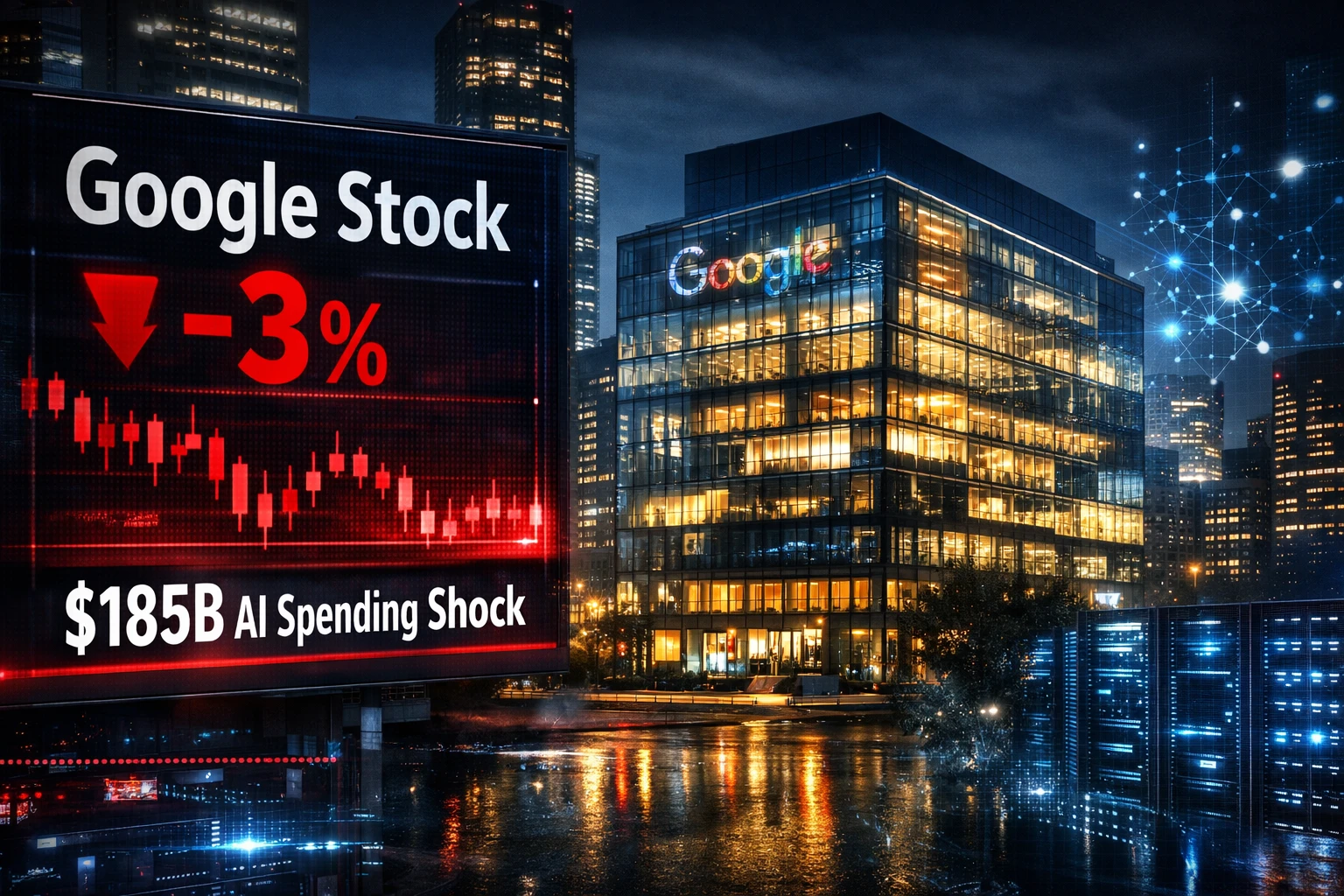
Alphabet, the parent company of Google, beat Wall Street expectations for the fourth quarter, but investors weren’t fully impressed. A massive new spending plan focused on artificial intelligence infrastructure cooled enthusiasm, sending shares lower in extended trading on Wednesday.
Even though Alphabet topped estimates for revenue, earnings per share, and cloud performance, the market reaction showed that Wall Street remains cautious about rising AI costs.
The company said it expects capital expenditures in 2026 to reach between $175 billion and $185 billion. At the high end, that would be more than double what Alphabet spent in 2025.
With this forecast, Alphabet is resetting expectations for 2026 and testing investor confidence. Back in October, the company had already warned of a “significant increase” in spending, but Wednesday’s projection still came in above what analysts expected — and higher than rival hyperscalers.
Microsoft, in its latest quarterly report, didn’t give a full-year forecast but said spending will decline sequentially this quarter after reporting $37.5 billion in recent capex. Meta expects to spend $115 billion to $135 billion in 2026 — nearly double its $72.2 billion from last year at the top end.
Amazon is set to report results on Thursday. Analysts expect its 2025 capex to come in around $124.5 billion, rising about 18% to $146.6 billion this year, according to FactSet.
Alphabet’s aggressive spending comes at a time when investors are highly sensitive to AI costs. Despite solid tech earnings overall, the software sector has lost 30% of its value over the past three months, CNBC’s Michael Santoli noted. Concerns are growing that AI could disrupt traditional software and make heavy spending riskier.
So far, Alphabet had largely avoided major stock swings and was one of the top performers of 2025. But the huge investment plan has clearly caught Wall Street’s attention.
Still, tech giants are racing to expand infrastructure to keep up with the exploding demand for AI services.
Google Cloud — home to most of the company’s AI products — saw its backlog jump 55% sequentially and more than double year over year, reaching $240 billion by the end of the fourth quarter, CFO Anat Ashkenazi told analysts. Cloud revenue also surged nearly 48% from a year earlier.
Ashkenazi said the 2026 capex will mainly fund AI compute capacity for Google DeepMind, help meet “significant cloud customer demand,” and support strategic investments in other projects. Some of the spending will also go toward improving user experience and boosting advertiser returns across Google services.
Looking back at 2025, Ashkenazi explained that most capital spending went into technical infrastructure — about 60% into servers and 40% into data centers and networking equipment during the fourth quarter — offering clues about how funds may be allocated in 2026.
During the earnings call, executives highlighted major AI progress. Google’s flagship AI app Gemini now has 750 million monthly active users, up from 650 million in the previous quarter. CEO Sundar Pichai also emphasized Google’s partnership with Apple to upgrade Siri using Gemini AI models, noting that Apple selected Google as its preferred cloud provider.
When asked what concerns him most, Pichai had a clear answer: compute capacity.
“Whether it’s power, land, or supply chain constraints — how do you scale fast enough to meet this extraordinary demand?” he said.
In December, Alphabet agreed to acquire data center company Intersect for $4.75 billion in cash plus debt, reinforcing its infrastructure push.
The pressure is real. Google’s AI infrastructure chief Amin Vahdat told employees the company must double its serving capacity every six months to keep up with demand, according to CNBC.
“The competition in AI infrastructure is the most critical — and also the most expensive — part of the AI race,” Vahdat said.
Bitcoin Slides Hard as Trump’s Fed Pick Sparks Fresh Fears for Crypto Markets