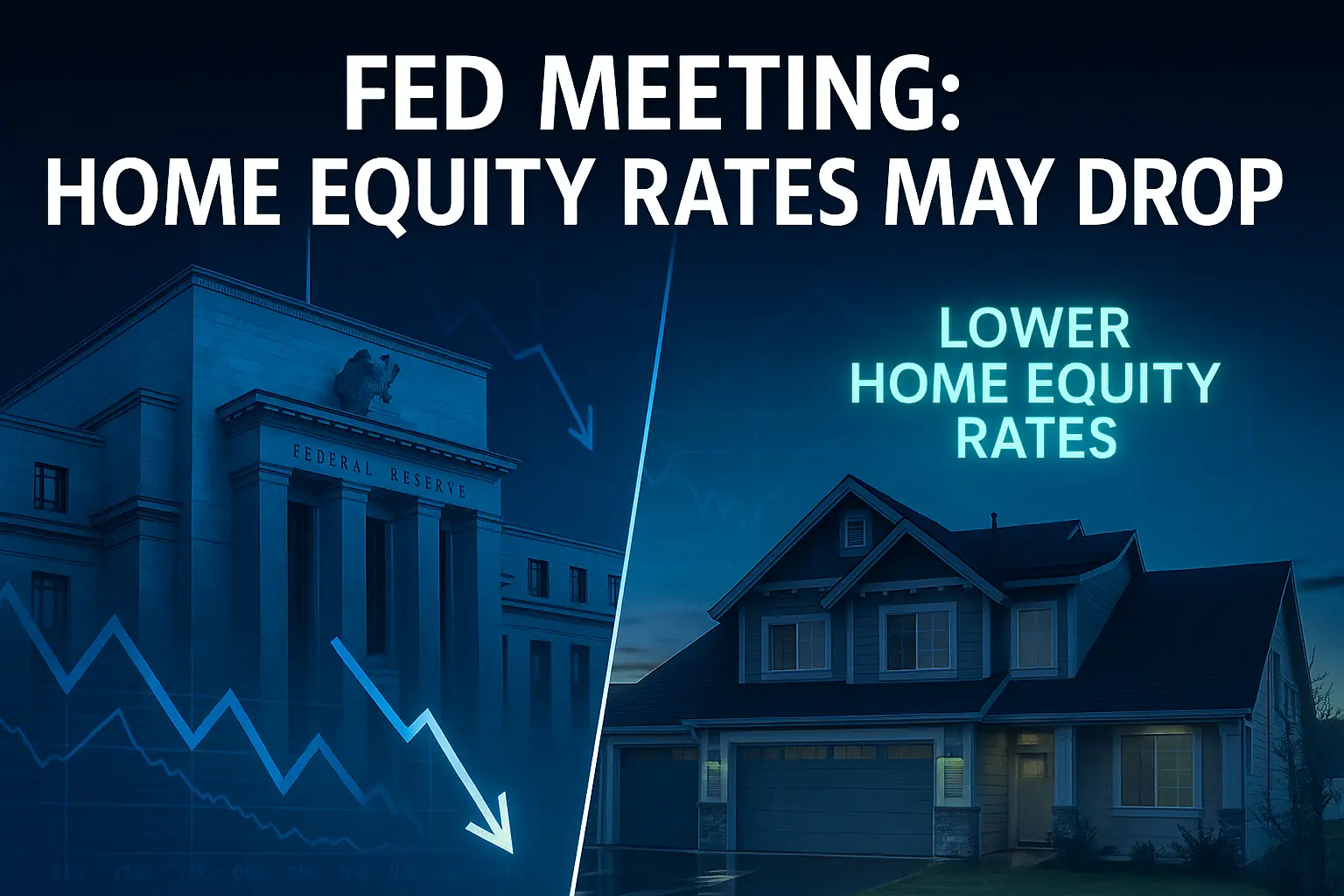
Millions of Americans stuck with steep borrowing costs may finally get a break. The Federal Reserve is widely expected to cut interest rates again when it wraps up its final policy meeting of 2025 tomorrow. The benchmark rate currently sits between 3.75% and 4.00%, and another cut would bring it down to 3.50% to 3.75%.
It may not sound like a huge move, but it would be the Fed’s third rate cut in four months — a trend that’s slowly giving borrowers some breathing room after years of high-cost lending.
One bright spot in this environment has been home equity loans, which remain far cheaper than personal loans and dramatically less expensive than credit cards, whose average rates are hovering near record highs. But since home equity loans use your house as collateral — and foreclosure becomes a risk if you can’t repay — it’s crucial to understand how rates move and whether it’s the right moment to borrow.
Here’s how home equity loan rates reacted to the last two Fed cuts — and what might happen next.
How Home Equity Loan Rates Responded After the Last Two Fed Cuts
The Fed lowered rates twice earlier this year — on September 17 and October 29. While the Fed doesn’t set home equity loan rates directly, its decisions heavily influence the lending landscape.
Here’s what happened:
After the September 17 Cut
- The average 5-year home equity loan rate dropped 9 basis points to 8.19% by September 24 (Bankrate).
- Rates ticked up slightly the following week but resumed a slow decline through October.
Heading Into the October 29 Cut
- By late October, the average 5-year rate had fallen to 8.02%.
- Two weeks after the Fed’s next rate cut, it dropped again to 7.99% on November 12.
- Since then, rates have hovered around that level.
What does this mean for you?
If the Fed cuts rates again this week — and most economists expect it will — home equity loan rates could slide even further. Some lenders may already be pricing in that drop, so borrowers may have a chance to lock in a competitive rate even before the Fed makes its move. But since each lender reacts differently, shopping around is key.
Is a HELOC the Better Option Right Now?
Homeowners weighing their borrowing options are also looking closely at HELOCs, which currently offer an average rate of 7.81% — noticeably lower than fixed home equity loan rates.
A few things to keep in mind:
Why HELOCs Look Attractive
- Rates are variable, meaning they can drop further if the Fed continues easing.
- They start lower than most home equity loan rates.
But There’s a Catch
- Variable rates can rise later if the market shifts.
- Home equity loans, by contrast, lock in today’s rate for the entire term.
There’s no one-size-fits-all answer here — your budget, risk tolerance, and financial goals should guide your choice. But with both products becoming more affordable throughout the year, now is a good time to compare options before making a decision.
Bottom Line
Home equity loan rates have been inching downward for more than a year, and they fell after each of the Fed’s last two cuts in September and October. If history repeats itself, borrowers may see another dip this week.
Meanwhile, HELOCs offer even lower rates today and could become cheaper if the Fed keeps easing in 2026.
The good news for homeowners: borrowing against your home is more affordable now than it has been in years. The next step is deciding whether a fixed-rate home equity loan or a flexible, potentially cheaper HELOC fits your needs best.