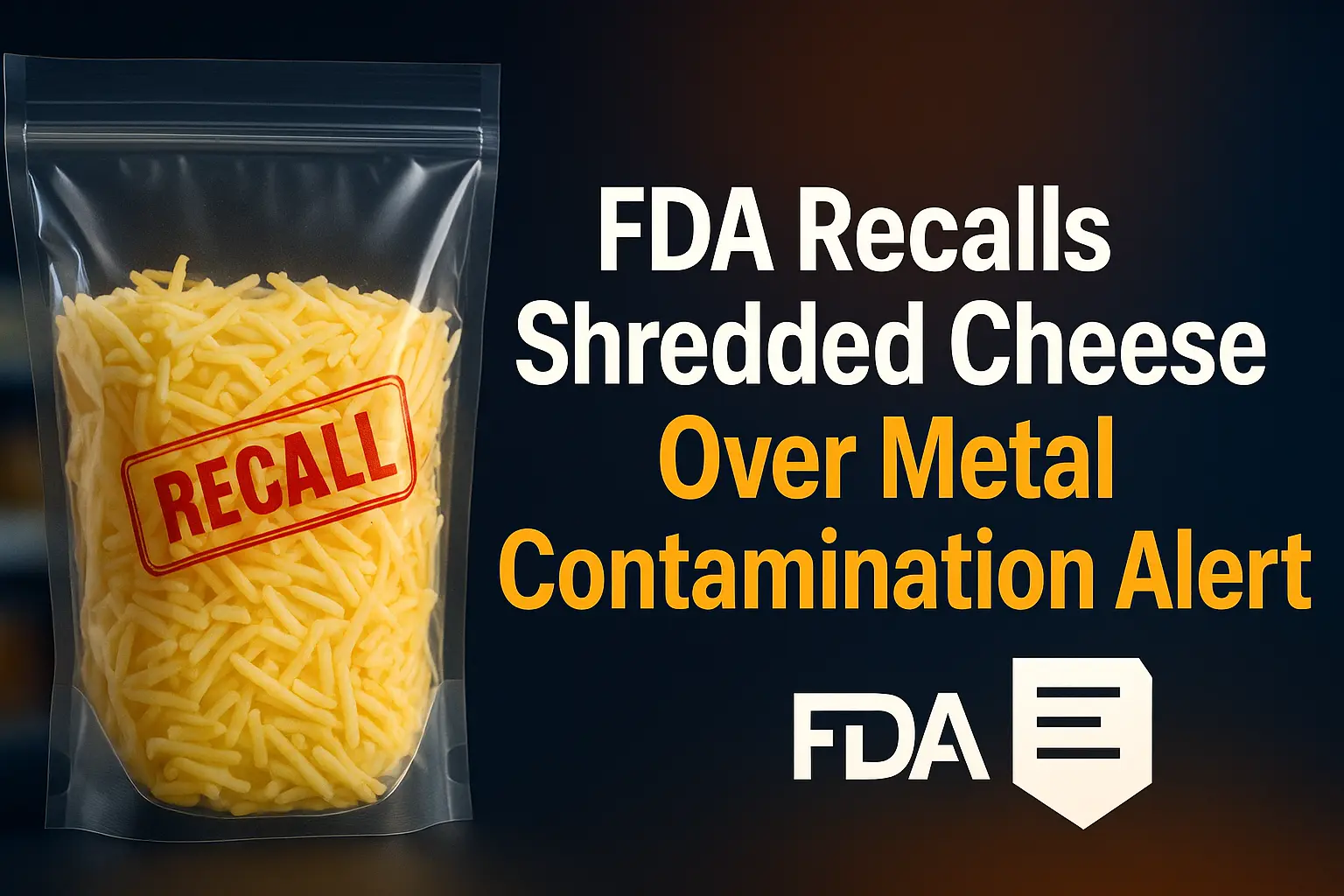
A few days ago, the U.S. Food and Drug Administration (FDA) announced a widespread recall due to the potential presence of metal fragments in several brands and store-label shredded cheese products. Reports indicate that the recall affects millions of packages and includes private-label shredded cheeses sold at major retailers like Walmart, Target, Aldi, Publix, and Sprouts. This step is being taken for consumer safety to prevent any potential injury or health problems.
FDA Recall Update
The FDA has provided an update regarding the incident, stating that the FDA recall of shredded cheese has been widespread across 31 states and some territories. The affected products include varieties such as mozzarella, Italian-style, and pizza-style blends—often sold under the retailer’s private-label name (e.g., Good & Gather, Great Value, Happy Farms, etc.). The company states that the problem is due to potential metal found in raw materials and is therefore being recalled as a precaution.
This recall has been reported in several news sources as the FDA shredded cheese recall or the shredded cheese recall. The FDA has also reviewed the risk level (Class II), which means the likelihood of serious and long-term harm is low. Still, temporary or reversible problems such as infection or internal injury are possible. Therefore, consumers are advised to check the UPC, best-by date, and batch code of packages stored in their freezers or refrigerators and take appropriate action if they are on the affected list.
What to do if you have such a package—The easiest and safest course of action is not to use the package. Many retailers are offering customers a refund or exchange; you can contact the store by showing the receipt or taking a photo of the package. If you choose to return it to the store, it’s best to seal the package securely and follow the return process. If anyone experiences unusual symptoms after eating, such as jaw/throat pain, severe stomach pain, or bleeding, seek immediate medical attention. This advice is useful in cases like the shredded cheese recall.
A few simple steps can be taken to avoid such incidents: examine the inside of the package under a bright light when opening it; discontinue use immediately if you see even tiny metal fragments near the package; keep a note of the store label and UPC so you can quickly identify if a cheese recall is reported; and when purchasing large quantities, it’s wise to check the manufacturer’s credentials and choose a good brand.
Finally, this case demonstrates that recalls, such as the FDA recall of shredded cheese, are essential from a consumer safety perspective; they identify potential hazards and notify consumers promptly. If you’ve recently purchased shredded cheese in your refrigerator, check its UPC and best-by date. If it’s on the shelf, return it to the store immediately or dispose of it safely. This way, you can protect yourself and your family from carelessness.