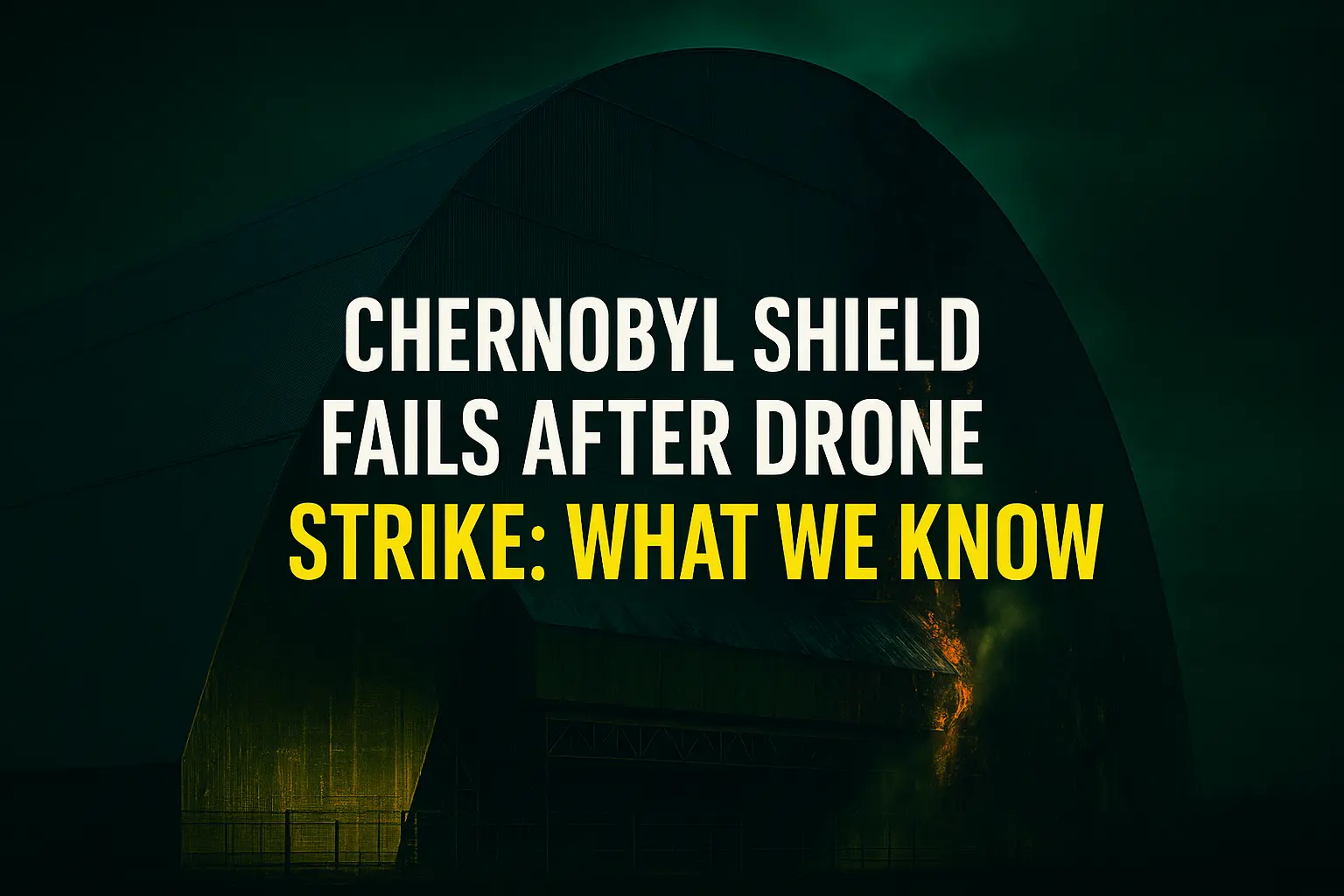
The protective steel shield built to contain radioactive waste at the Chernobyl disaster site can no longer perform its core safety function after a drone strike earlier this year, the International Atomic Energy Agency (IAEA) warned on Friday.
The structure — known as the New Safe Confinement (NSC) — was “severely damaged” in the February attack and has now “lost its primary safety functions, including the confinement capability,” the agency said.
Ukraine accused Russia of launching the February 14 strike, an allegation Moscow denies.
According to the IAEA, the drone hit the NSC, triggered a fire, and damaged the protective cladding wrapped around the massive arch.
IAEA Calls for Major Repairs
The nuclear watchdog is urging a full-scale renovation of the NSC — a giant steel structure installed several years ago to enable long-term clean-up operations at the world’s most infamous nuclear disaster site.
IAEA Director General Rafael Mariano Grossi said only limited temporary fixes have been made so far.
“Timely and comprehensive restoration remains essential to prevent further degradation and ensure long-term nuclear safety,” Grossi warned.
He emphasized that despite the damage, the structure’s load-bearing elements and monitoring systems were not permanently affected.
The agency, which maintains a permanent presence at Chernobyl, says it will continue supporting efforts to restore stability and safety at the site.
Chernobyl Back in the War Zone
This isn’t the first time Chernobyl has been pulled into the nearly four-year war. Russian forces stormed the exclusion zone during the opening days of the invasion in February 2022, seizing the plant and holding staff hostage before withdrawing a month later and returning control to Ukraine.
Images from the February 2025 strike show shattered drone fragments scattered across the exclusion zone, highlighting the vulnerability of the site even decades after the disaster.
A Monument of Engineering Now in Jeopardy
The NSC — the giant arch covering the destroyed No. 4 reactor — is the world’s largest movable land structure, designed to trap remaining radioactive materials and keep the site stable for a century.
Built between 2010 and 2019, the structure cost €2.1 billion and was funded by more than 45 international donors through the Chernobyl Shelter Fund. The European Bank for Reconstruction and Development once called it “the largest international collaboration ever in the field of nuclear safety.”
Cloudflare Stock Drops as Another Major Outage Hits the Internet — Company Says Fix Is In
Echoes of 1986
Chernobyl’s legacy still looms large.
On April 26, 1986, an explosion ripped through Reactor No. 4, then part of the Soviet Union, sending radioactive material across Ukraine, Belarus, Russia, and parts of Europe.
More than 30 people were killed in the initial blast and emergency response, according to the IAEA and the World Health Organization. Decades later, high rates of cancer and birth defects continue to impact communities exposed to radiation.