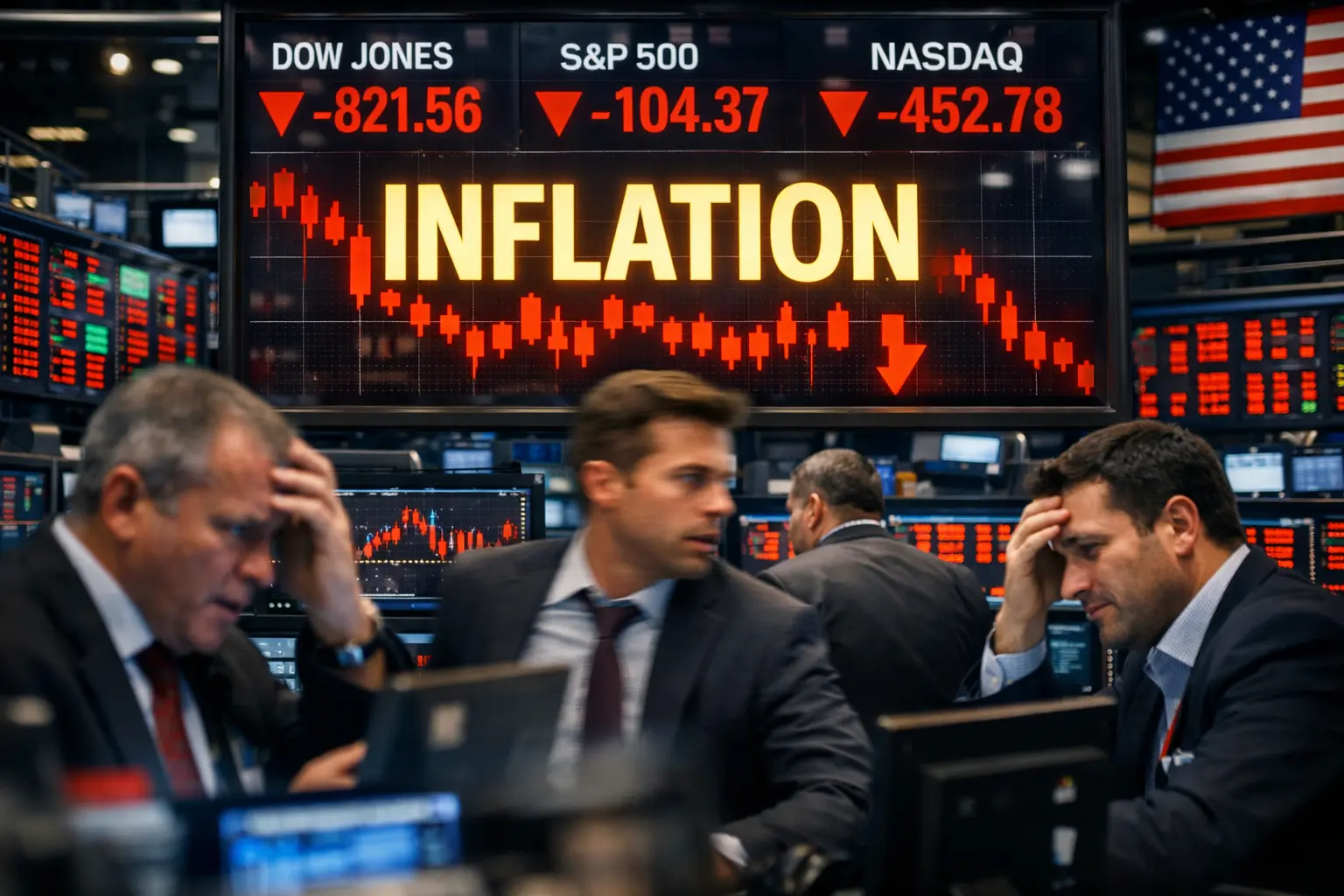
Bitcoin price has seen a sharp decline in recent days — according to some reports, it was the worst week in the last three years. Investors’ fear increased and selling gained momentum in the entire crypto market. This decline is not an isolated news — there are some solid reasons behind it and the changing macro-scenario that may continue to exert pressure in the short-term.
The biggest immediate reason is the large outflows from US-listed spot ETFs. November saw record outflows from spot Bitcoin ETFs — hundreds of millions of dollars were pulled out, and some big funds like BlackRock’s ETFs also reported massive withdrawals. When ETF investors withdraw money, selling waves intensify in the market and this puts pressure on the bitcoin price.
The second major reason is the uncertain environment of the macro-economy. Recent economic data and recent Fed rate-cut expectations have dampened demand for risk assets. Especially when the chances of a Fed rate-cut appear low, investors tend to sell non-interest-bearing assets such as bitcoin — this is reflected in the bitcoin price at the seed-level. Additionally, recent data gaps and political events in the US have also increased investor inconsistency.
The third is a technical and market-liquidity issue: low liquidity and liquidations of leveraged positions. When liquidity dries up — like during the holidays (Thanksgiving) — even small market movements can lead to big price swings. Often, if large whales or institutional investors sell on a large scale, the bitcoin price can fall quickly and recovery may take time.
Crypto Sentiment
Market sentiment is also extremely negative — the Fear & Greed Index is currently showing ‘extreme fear’. When the index is at a lower level, retail and short-term traders do more panic selling, which increases searches like “why is crypto crashing” and may deepen the decline. That’s why many people are asking: why is bitcoin crashing and why is bitcoin dropping — the answers to both of which are often linked to ETF flows, macro signals, and liquidity.
So will this sell-off continue further? The risks appear higher in the short-term. If ETF outflows continue, the Fed-rate outlook is still uncertain, or on-chain indicators (such as exchange inflows) remain bearish, the bitcoin price could remain under pressure. On the other hand, if key US data like CPI/Jobs improves and rate-cut expectations strengthen, capital may then return to risk assets and bitcoin price may find relief. At present the signals are mixed, but the downside risk is sharp and immediate.
Practical advice for investors (for US audience):
- Be patient — If you are a long-term holder, remember your time horizon before selling immediately. Bitcoin price will remain volatile in the short-term.
- Risk management — limit the use of leverage; Liquidation risk has increased a lot.
- Keep an eye on the sources — regularly check things like ETF flows, CPI/Jobs, Fed signals, and the Fear & Greed Index — these give good signals of short-term direction.
- Diversify — keep your portfolio balanced instead of relying solely on bitcoin.
Crypto Chaos: Bitcoin Drops 20,000 Points — Should You Panic or Buy?
Conclusion: The basis for this selloff is not simple — it is a combination of ETF outflows, macro uncertainty and declining liquidity. Therefore, there remains a possibility of further fluctuations for “bitcoin price” in the short-term. For both US investors and traders, this is a time to exercise caution — hasty decisions often prove costly. If you keep an eye on the market movements and keep the risk under control, then you can adjust the position in better conditions.