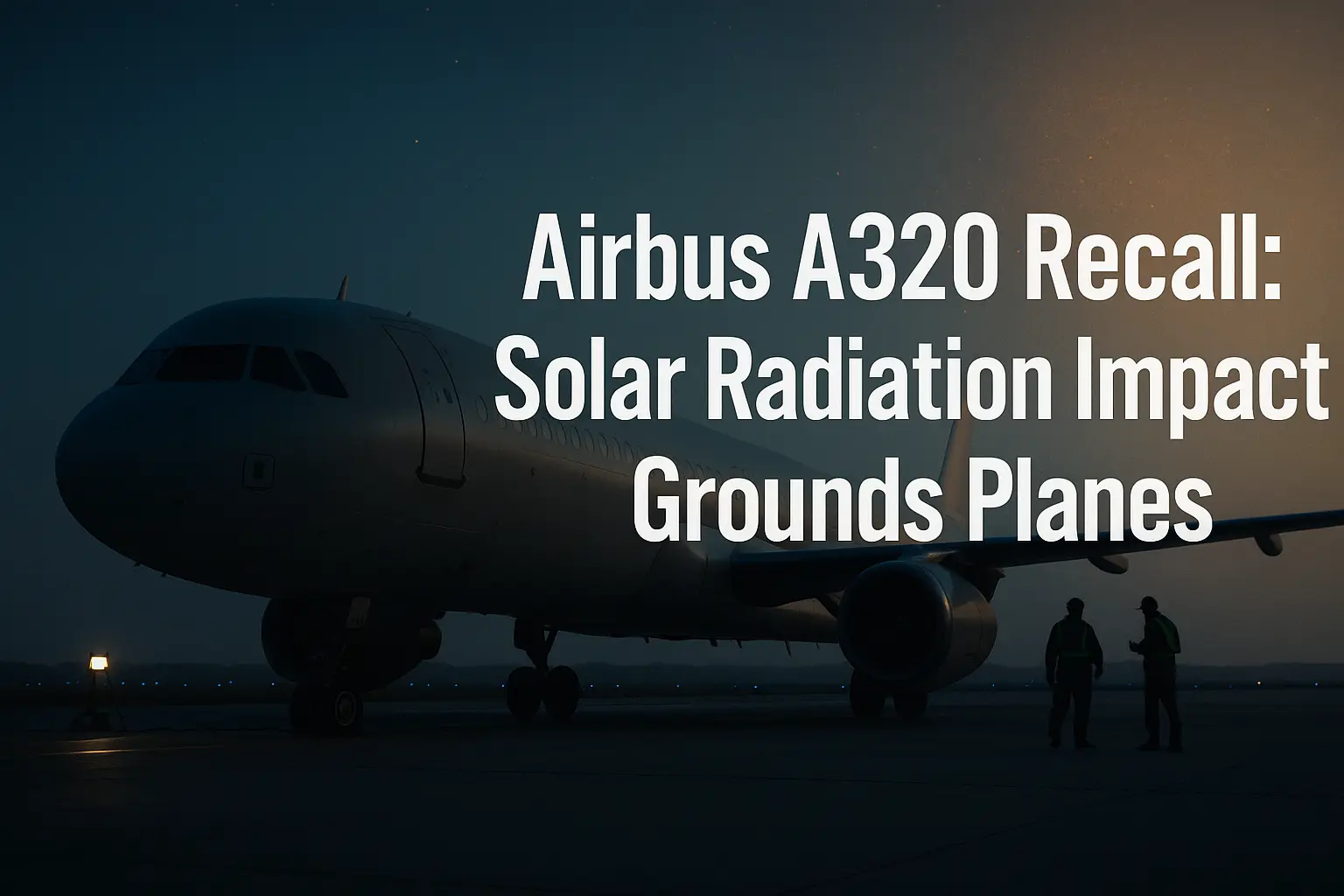
Recently, Airbus A320 Recall temporarily grounded some aircraft for safety reasons—a move taken to prioritize the safety of both passengers and crew. According to initial information, Airbus observed that excessive solar radiation could affect some aircraft sensors and flight-data systems, so the company ordered controls and inspections to investigate and conduct necessary testing. This incident caused some flight delays and operational changes, forcing both passengers and airlines to take action.
“Airbus A320 Recall” – What’s Actually Happening
Indeed, people often see terms like “Airbus A320 recall” when searching the media in such cases. While this incident wasn’t intended to be a large-scale product recall, this tagline can often appear for users searching for information, so people are searching for updates related to the term “Airbus A320 recall.” It’s worth noting that no comprehensive factory-level replacement or industry-wide recall has been publicly announced yet—this was a safety-investigation initiative.
Technically, what happened: When solar or cosmic radiation is higher than normal at high altitudes in the atmosphere, high-energy particles can cause temporary malfunctions in an aircraft’s sensitive electronics. Given the increased reliance on aircraft navigation and automation systems, companies take any potential issues seriously. In this context, Airbus increased inspections on some aircraft and performed necessary software and hardware verifications. People again searched for updates using the term “Airbus A320 recall” to understand whether their flight/model was affected.
Impact on airlines and passengers: Schedule changes and flight delays were recorded on some routes. Airbus and airlines informed passengers, and after ensuring safety, the aircraft were declared flight-ready. Airline customer service plays an increased role in such situations—rescheduling, refund options, and offering alternative connections are common procedures. Searchers are once again searching for a search term—“Airbus A320 recall”—to check if their ticket or model is listed.
Aviation Safety Context
This type of incident is not new to the aviation world. Aviation safety protocols and certification processes are very strict: immediate precautions are the norm for any uncertain signal. Therefore, Airbus’s action was taken in compliance with regulations and with passenger safety as paramount consideration. The industry is also discussing how to mitigate such impacts in the future by implementing better shielding, software redundancy, and monitoring tools—this issue is not limited to one company, but pertains to the entire aviation tech ecosystem. At such times, people search for updates using terms like “aircraft grounding,” “flight delays,” “aviation safety,” and “solar radiation.”
India records fastest growth in six quarters, also avoids pressure on trade
What to expect next: If your flight was affected or you fly a proprietary Airbus A320 model, check official Airbus notices, customer information from your airline, and updates from authorities like the FAA. Publicly available information currently suggests this was a controlled and temporary safety inspection—not a widespread manufacturing defect that would require a large-scale product recall. Nevertheless, people are frequently searching for “Airbus A320 recall” to find the latest information.
Conclusion: Natural phenomena like solar radiation can pose challenges on high-altitude flights, and Airbus conducted the necessary recalls with safety as a priority. It’s important for passengers to understand that such precautions are generally a safety measure, not to panic, but to stay informed. Continue to check official Airbus announcements and your airline’s notices for updates. Also, terms like “Airbus A320 recall”, “aviation safety”, “flight delays”, and “solar radiation” will be useful when searching.