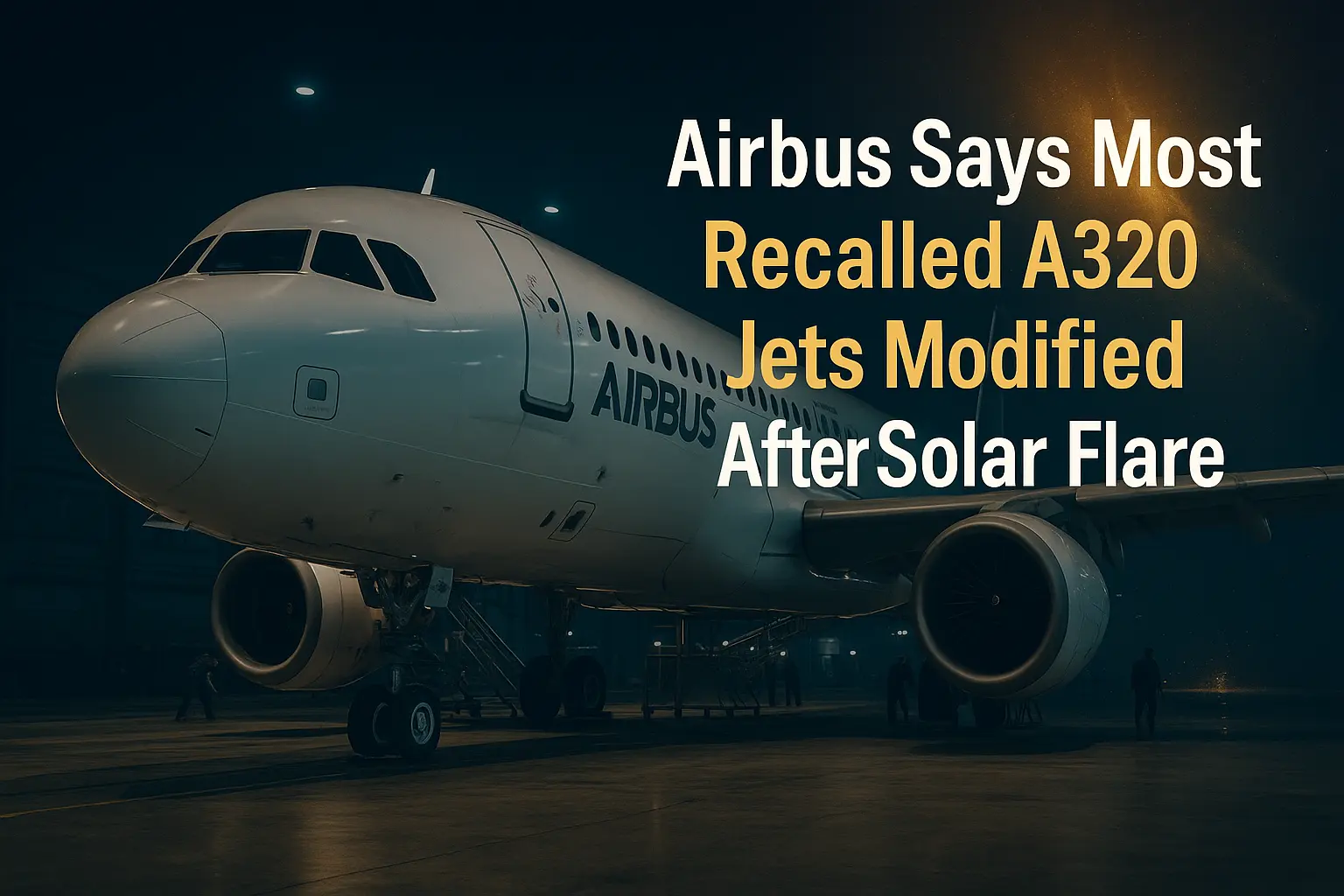
Airbus recently announced that most of the nearly 6,000 A320-family aircraft it recalled have now been modified. The action was taken due to a technical risk Airbus described as linked to “intense solar radiation”—that is, events that occasionally cause surges in cosmic particles and radiation (sometimes referred to as solar flares). Airbus and several airlines worked together to quickly complete the necessary software and, in some cases, hardware changes, to safely return the aircraft to service.
The crux of the matter is that Airbus discovered that very strong solar activity—what we might refer to as a solar flare—can sometimes affect the electronic data that runs flight-control systems. Data corruption, particularly in components like the ELAC (Elevator and Aileron Computer), could result in unwanted manual or auto-logic commands, which could affect the aircraft’s behavior during flight. Therefore, Airbus issued immediate instructions to apply the necessary software versions or patches before the flight.
Airbus A320 Issue
This issue first came to public attention when a JetBlue flight experienced a sudden altitude loss – the incident sparked an investigation, and Airbus issued a fleet action for A320-family aircraft worldwide. Subsequently, many airlines – including American Airlines and other major operators – quickly implemented software rollbacks or updates to maintain passenger safety. You can think of this as a kind of precautionary service action: the vulnerability was identified, aircraft were recalled, and technicians applied patches/modifications.
Airbus and airlines have reportedly completed extensive work on most aircraft; reports also indicate that the remaining number remains very small – some reports suggest fewer than 100 aircraft remain to be repaired. This means that large-scale operational restoration was possible quickly, avoiding significant disruptions, especially during busy periods like Thanksgiving in the US. However, some older aircraft may require hardware replacement, which will take some time.
It’s important to understand that astronomical events like solar flares don’t typically pose a direct passenger safety threat—but when software or sensor logic is so sensitive that excess radiation corrupts some data, effective mitigation becomes essential. Therefore, airlines and regulatory bodies (such as EASA and the FAA) promptly issue directives in such cases and ensure all operators apply the necessary patches. This process is a sign of transparency and safety for passengers.
Airline Updates
Of note for US-based readers, major domestic airlines — such as American Airlines and JetBlue (often found in searches for “jet blue” or “jetblue”) — have quickly completed the necessary changes on their respective A320-series aircraft, minimizing the impact on daily flights. If you’ve recently encountered a ticket or flight delay, keep an eye on airline messages and ticket updates — in most cases, airlines are notifying their customers directly.
The bottom line is that Airbus’s move and the airlines’ quick response are examples of a safety-enabled response. Natural events like solar flares can create challenges for technical systems, but regulations and standards, rapid patching, and transparent communication can help manage risks quickly. If you frequently fly the A320-series or are a customer of airlines like American Airlines/JetBlue, keep an eye on your airline’s official notifications—they usually provide real-time information and potential delays/route changes.