Key Points
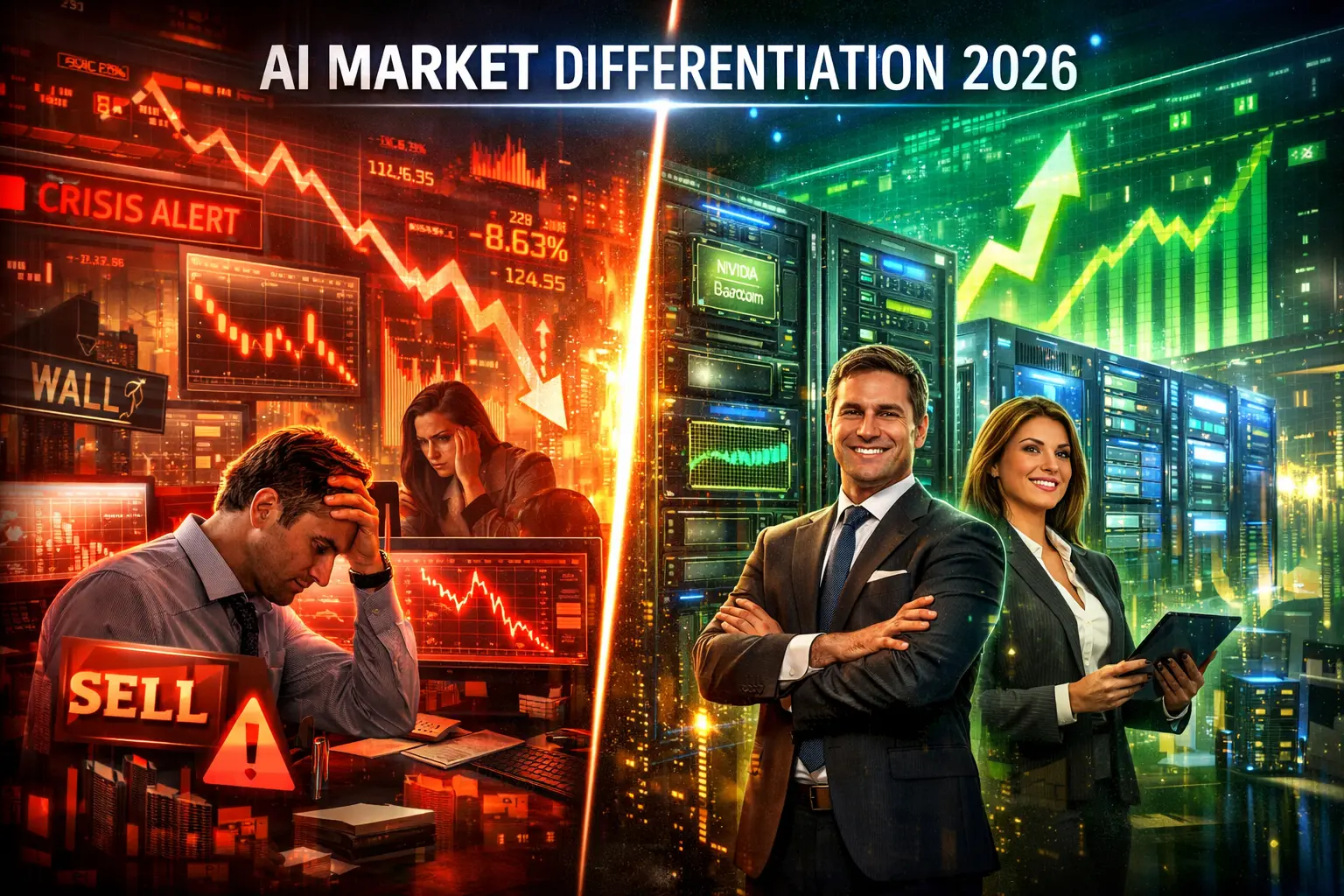
- Investors poured heavily into AI names this year, but the market may split into clear segments in 2026.
- Wild tech sell-offs and rallies in late 2025 could be early signs of that shift.
- AI infrastructure players may come out on top as Big Tech rewires its business model.
The final stretch of 2025 was anything but calm for tech investors. A whirlwind of sell-offs, sharp rebounds, sky-high valuations, and complex financing deals fueled fresh worries that the AI rally may be drifting into bubble territory.
But this volatility may also be a preview of what’s coming next: a smarter, more selective AI market. Investors are starting to look more closely at who’s spending money on AI — and who’s actually earning it, said Stephen Yiu, chief investment officer at the Blue Whale Growth Fund.
Right now, especially for retail investors buying AI exposure through ETFs, the market hasn’t really separated the different players, Yiu told CNBC. Many aren’t distinguishing between:
- Companies with exciting AI products but no proven business model,
- Firms are burning massive cash to build AI infrastructure, and
- Companies are getting paid as others ramp up AI spending.
So far, “every company seems to be winning,” Yiu said. But AI is still in its early stages, and he believes the market is about to get much more selective.
Three AI Camps Are Emerging
According to Yiu, the AI world is breaking into three main groups:
1️⃣ Private AI companies and startups — like OpenAI and Anthropic — which pulled in about $176.5 billion in venture capital in the first nine months of 2025, PitchBook data shows.
2️⃣ Listed AI spenders — Big Tech giants such as Amazon, Microsoft, and Meta, who are writing enormous checks to power their AI ambitions.
3️⃣ AI infrastructure winners — companies like Nvidia and Broadcom that supply the chips and backbone of AI systems.
Blue Whale evaluates companies by comparing their free cash flow yield to their stock price to decide whether valuations really make sense. And right now, many of the “Magnificent 7” are trading at steep premiums thanks to aggressive AI investment, Yiu said.
Even though he believes AI will reshape the world, Yiu doesn’t want to bet on the heavy spenders. Instead, his fund prefers to be “on the receiving end” — where the AI money flows.
The AI Hype Isn’t Everywhere — But Risks Are Real
The AI frenzy isn’t evenly spread across the entire market, said Julien Lafargue, chief market strategist at Barclays Private Bank and Wealth Management. Instead, it’s clustered in specific pockets.
The biggest danger sits with companies benefiting from AI hype but not yet generating real earnings, he warned — for example, some quantum computing names. In many of those cases, optimism is running far ahead of real financial results. And that’s where differentiation becomes critical.
Big Tech’s Business Model Is Changing — And That Changes the Risk
Another big shift? Big Tech isn’t “lightweight” anymore.
Companies like Meta and Google are transforming into heavy-hitting hyperscalers, pouring billions into GPUs, massive data centers, land, power, and AI-driven platforms. That adds cost, risk, and complexity — and could change how investors value them.
Dorian Carrell, head of multi-asset income at Schroders, said valuing these names like traditional software companies may no longer make sense — especially when some are still figuring out how to pay for their AI ambitions.
In 2025, several tech giants tapped debt markets to fund AI infrastructure. While Meta and Amazon did this too, they still hold strong cash positions, noted Ben Barringer of Quilter Cheviot — unlike companies with tighter balance sheets. Private debt markets could become a major factor in 2026, Carrell added.
What Happens If AI Revenue Doesn’t Keep Up?
Here’s the big question for 2026: Will AI revenue grow fast enough to justify massive AI spending?
If not, companies may see thinner profit margins — and investors may rethink returns.
As expensive hardware and infrastructure begin depreciating, financial gaps between companies could widen further, Yiu warned. Many AI-spending companies haven’t fully reflected these costs in their financial statements yet — but that will start changing next year.
And when it does?
Expect even sharper separation between winners and losers.
“More and more differentiation is coming,” Yiu said.