Jan 31 — Bitcoin is under renewed pressure as investors react to political and monetary policy shifts in Washington, extending a sharp selloff across the crypto market.
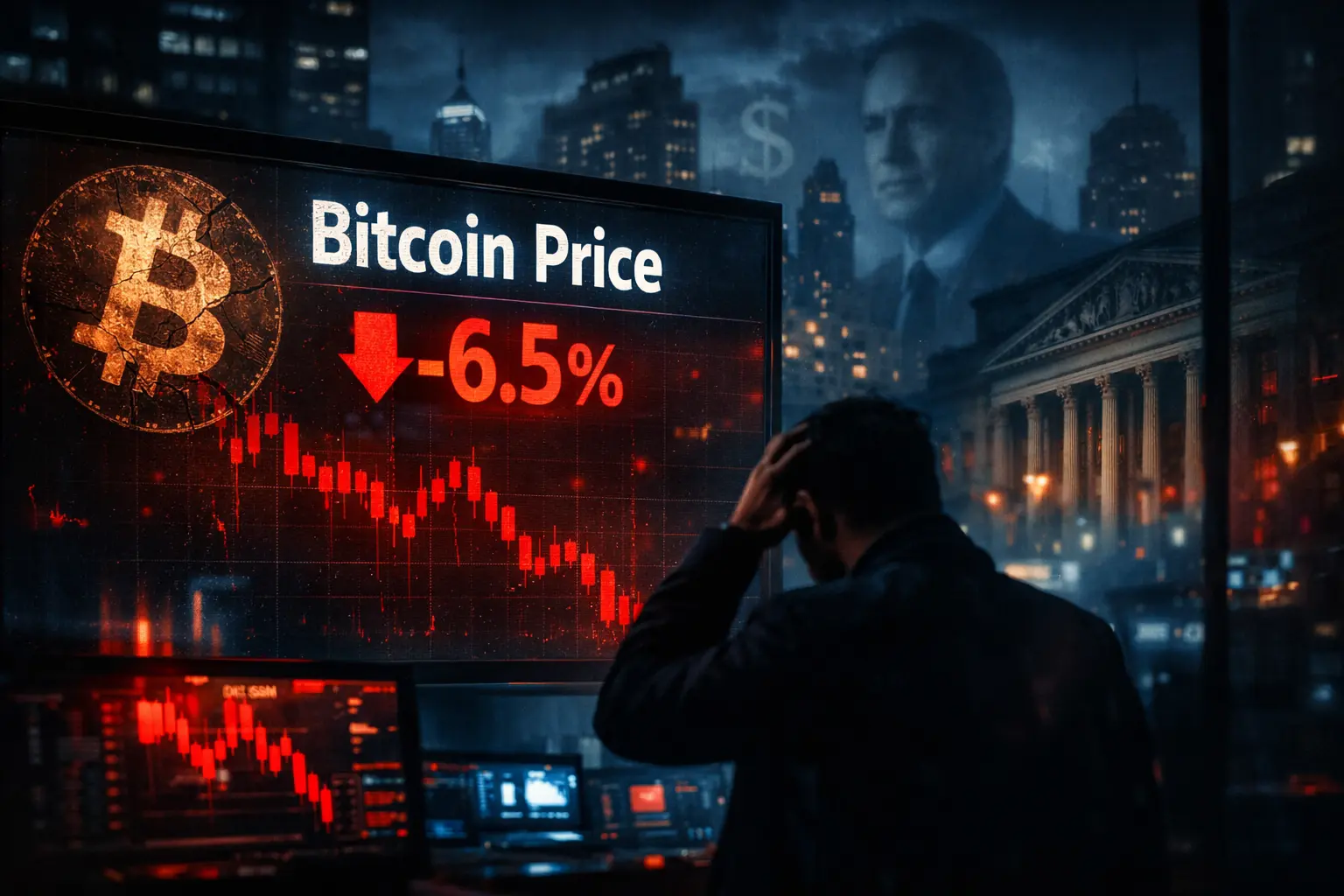
The world’s largest cryptocurrency fell 6.53% to $78,719.63 by 12:48 p.m. ET on Saturday, continuing losses from the previous session. On Friday, Bitcoin briefly dropped to $81,104, its lowest level since November 21.
The latest decline comes after the U.S. dollar strengthened following President Donald Trump’s decision to nominate Kevin Warsh, a former Federal Reserve governor, as the next Fed chair. Some traders worry Warsh could move to tighten liquidity across the financial system, a shift that would be unfriendly to risk assets like cryptocurrencies.
Warsh has openly called for what he describes as a “regime change” at the Fed, including a push for a smaller central bank balance sheet. That stance is unsettling for crypto investors, who have long benefited from periods when the Fed flooded markets with liquidity—conditions that tend to lift speculative assets such as Bitcoin.
Market data showed Bitcoin trading near $77,829 later in the day, down more than 4%, according to CoinMarketCap.
Brian Jacobsen, chief economist at Annex Wealth Management in Wisconsin, said the Fed’s “bloated balance sheet combined with heavy-handed bank regulation” has trapped liquidity on Wall Street rather than allowing it to reach the broader economy. That imbalance, he said, has helped inflate bubbles in assets ranging from bonds and metals to cryptocurrencies and meme stocks.
The weakness wasn’t limited to Bitcoin. Ether fell 11.76% to $2,387.77 on Saturday afternoon. The broader crypto market has struggled to regain momentum since tumbling last year, especially as gold and U.S. stocks have surged to new highs.
“Sometimes these price adjustments feed on themselves,” Jacobsen said, adding that Friday’s sharp drop served as a reminder of crypto’s risks. He noted that more selling over the next few days is “possible, if not likely.”
The downturn marks a tough stretch for an industry that once hoped for a boom under a crypto-friendly Trump administration. Bitcoin has now lost about one-third of its value since hitting record highs in October.
Why Trump’s Fed Pick Matters for Crypto
Trump formally announced Warsh’s nomination on Truth Social, praising him as a future “GREAT Fed Chairman” and signaling an end to months of public friction with current Fed Chair Jerome Powell. Trump has repeatedly criticized Powell over interest rates and the rising cost of the Fed’s headquarters renovation, even after the central bank delivered rate cuts late last year.
The nomination lands at a fragile moment for digital assets. Bitcoin has slid from a recent high near $90,400 to around $82,800, according to CoinGecko, down roughly 7% over the past week. Investors have pulled back from riskier bets as expectations shift around how aggressively the Fed might ease policy.
Fed decisions matter deeply for crypto because digital assets often trade like risk-on investments. Higher interest rates make safer assets like U.S. Treasurys more attractive, pulling money away from volatile markets such as crypto. Lower rates tend to boost liquidity and encourage risk-taking. A stronger dollar—often linked to tighter Fed policy—has also historically weighed on Bitcoin prices.
That said, crypto’s reaction to Fed policy hasn’t always followed logic. A CoinGecko report found that Bitcoin fell after most Fed announcements in 2025, even during periods of rate cuts—a pattern often referred to as “selling the news.”
Kevin Warsh’s Complicated History With Crypto
Warsh, 55, served on the Fed’s Board of Governors from 2006 to 2011, becoming the youngest governor in the institution’s history. He later advised the Bank of England, joined the Hoover Institution and Stanford Graduate School of Business, and now works at Duquesne Family Office alongside billionaire investor Stanley Druckenmiller.
His views on crypto have evolved. In a 2022 opinion essay, Warsh criticized many crypto projects as “fraudulent” and “worthless,” arguing that cryptocurrency is “software, not money.” He also supported the idea of a central bank digital currency (CBDC) as a response to China’s digital yuan—an approach that clashes with current Republican skepticism toward CBDCs.
More recently, however, Warsh has softened his tone. In an interview last May, he said Bitcoin “does not make me nervous” and described it as a useful asset that can act as a check on policymakers.
For now, markets remain uneasy. As investors wait to see how aggressive Warsh might be if confirmed, uncertainty around Fed leadership and liquidity is adding fresh pressure to an already struggling crypto market.