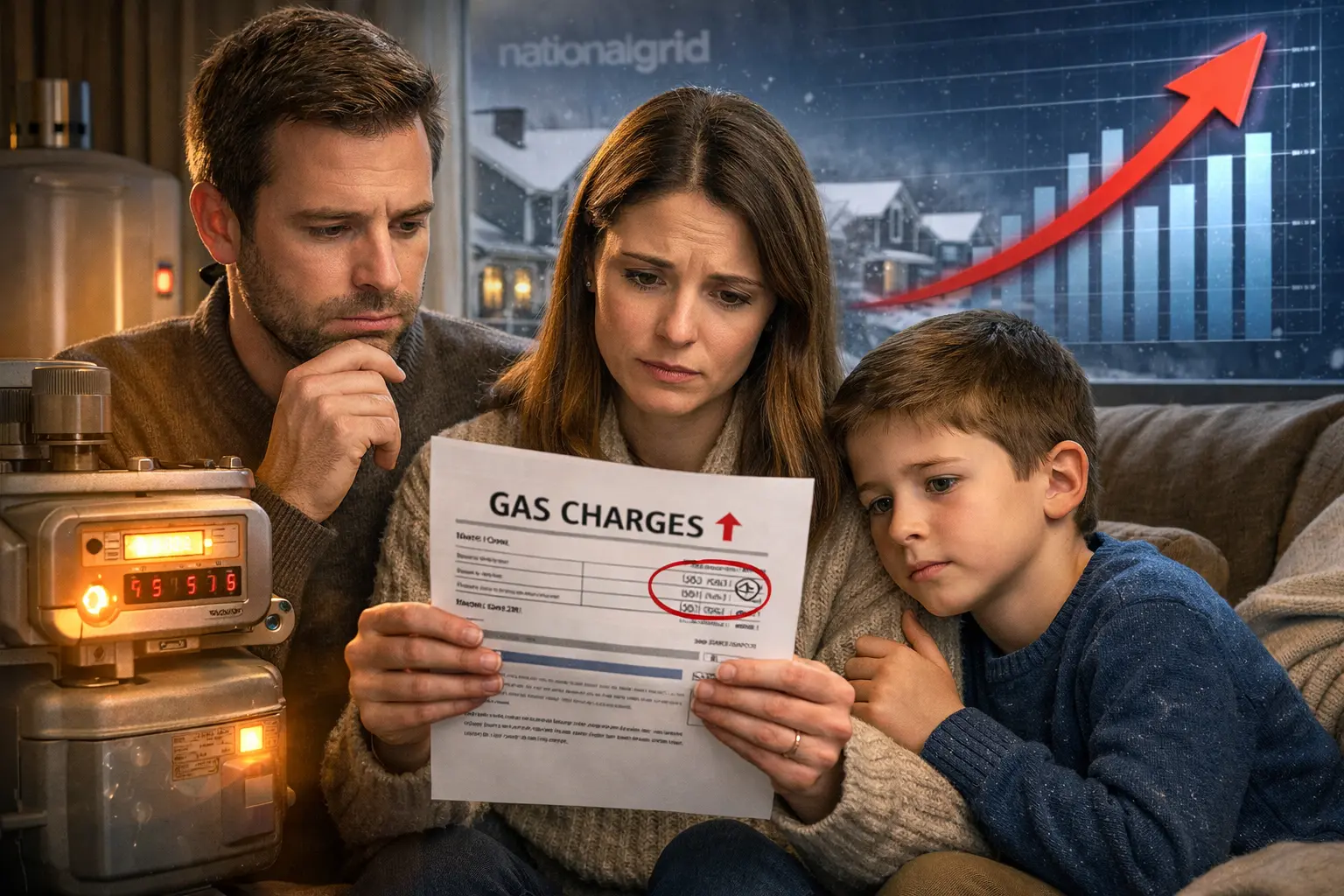
National Grid recently submitted a proposal to increase rates for its gas customers in Massachusetts. If approved, the proposal is expected to increase average annual bills by approximately 10%, and the impact will be noticeable on monthly bills.
How much will it affect customers? The company states that in some areas (such as the Boston Gas service area), the average customer could see an increase of approximately $24 during a typical winter month, while in other areas (such as the Cape Cod/Colonial Gas service area), the average increase is projected to be around $25. These figures are based on average residential usage — the actual increase will depend on your usage (therms) and location.
How Much More Could Customers Pay This Winter?
The company says typical residential customers could see noticeable monthly increases — with the exact amount depending on location and usage.
Boston Gas service area
Average households in the Boston Gas region may see bills rise by roughly $24 per month during a typical winter month.
Cape Cod / Colonial Gas service area
Customers in these areas are projected to face average increases of around $25 per month.
Important context
These estimates are based on average residential consumption. Actual bill increases will vary depending on your location, energy usage (therms), and individual household demand.
Jobs Slow, Unemployment Jumps to Four-Year High — Here’s What the Latest Labor Report Really Says
Why is this proposal being made, and when could it take effect?
National Grid says the proposed changes are necessary to cover operating costs, supply costs, and network investment needs. The company’s filings and rate petition will go before the DPU (Massachusetts Department of Public Utilities) — meaning public hearings and regulatory review are required before any final decision is made. A final decision and implementation date will be determined after this process.
What really matters to you — how much can it increase each month?
- Based on average figures, an increase of $24–$25 per month is projected during the winter months. This amount may be lower in the summer due to reduced heating usage.
- In percentage terms, this translates to approximately a 10% annual increase – meaning if your annual gas bill was previously $1,000, it could rise to around $1,100, and the monthly difference will vary accordingly.
Who will be most affected?
- Families that rely heavily on heating (older homes, high thermostat use) will see larger bills.
- People on fixed incomes and small businesses may struggle to cope with rising energy costs.
- In districts where pipeline or network upgrades are needed, delivery charges may also increase, further driving up bills. (Massachusetts regulators are also investigating this type of delivery-charge volatility).
Does National Grid have assistance options?
National Grid has previously implemented some discount and assistance programs for low-income customers—these programs and payment assistance options can be found on the next rate statement or the company website. Affected customers can check their eligibility and apply for assistance.
What you can do — practical suggestions (that you can implement immediately)
- Review your bill carefully: Compare your current therm usage (monthly therms) to your bills from previous winters.
- Energy savings: Lower your thermostat by 1–2°C, seal drafts around doors and windows, and check your insulation—small steps can reduce heating costs.
- Payment plans and assistance: If you have a low income, inquire about National Grid’s credit/discount programs and state assistance programs.
- Public comments and hearings: Consumers can share their opinions during the DPU’s public hearing phase—this is part of the decision-making process.
Conclusion (Summary)
National Grid’s proposal signals higher costs for Massachusetts gas customers—initial estimates suggest an average increase of $24–$25 per month this winter, and potentially up to a 10% increase annually. The final impact will depend on your usage, location, and regulatory decisions, so monitor your bill, explore available assistance programs, and participate in public hearings.