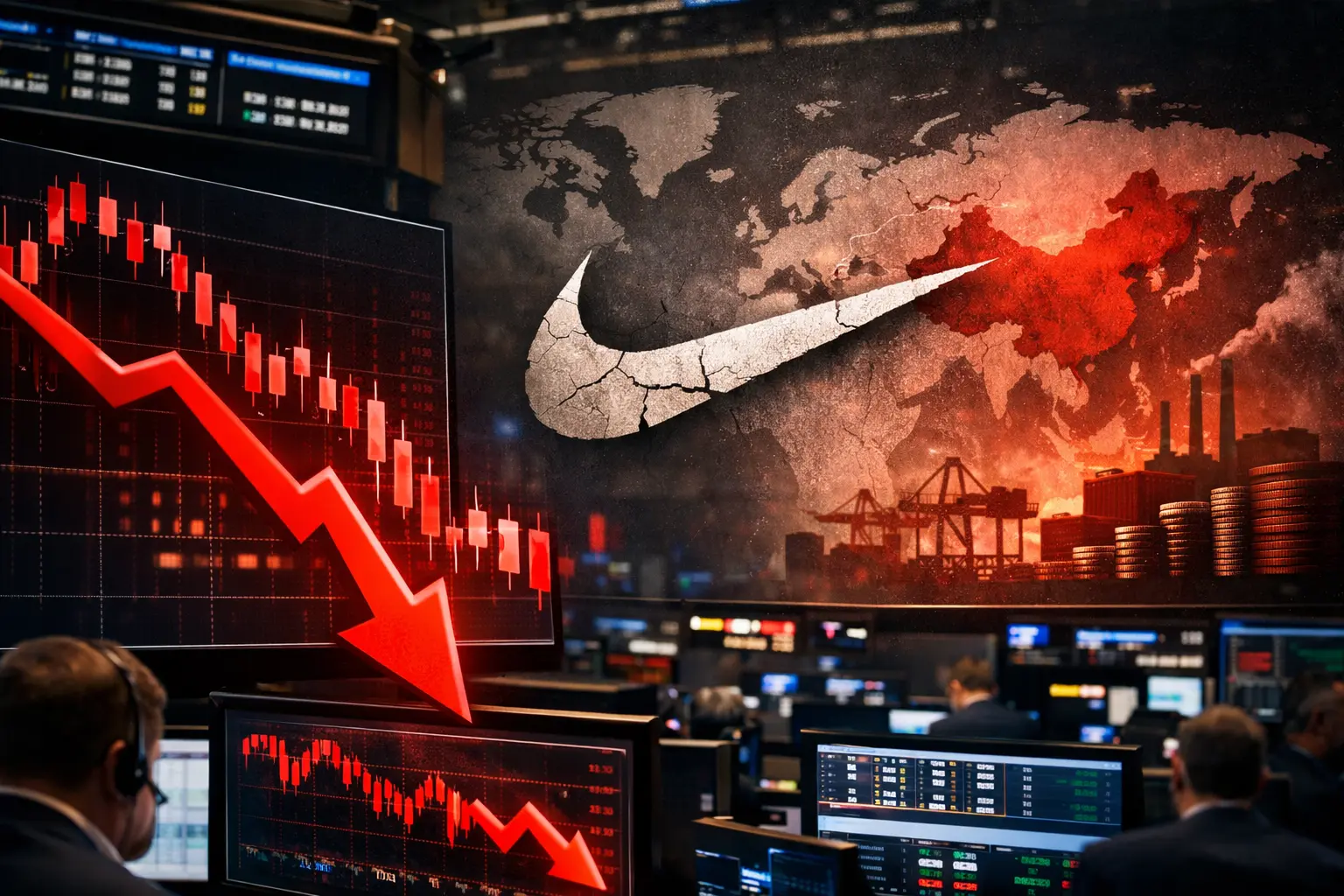
Nike’s shares suddenly dropped by up to 10% in pre-market trading — and the decline isn’t due to just one number, but a combination of factors. This event surprised many investors because while the company beat revenue expectations in its recent earnings report, profit margins and regional performance raised concerns.
What Happened: Nike’s Q2 results were better than some estimates, but a deeper look revealed weaknesses in margins and the direct-to-consumer channel. The reported figures showed mixed signals in earnings per share (EPS) and revenue, but a sharp decline in gross margins and increased expenses weakened the overall earnings story. These technical points put pressure on Nike’s stock.
A major reason is the sharp decline in sales in Greater China. The company stated that sales in China continue to be weak — this significant drop in the region disappointed investors. The slowdown in China directly impacted Nike’s stock sentiment because Greater China has historically been a high-growth market for Nike.
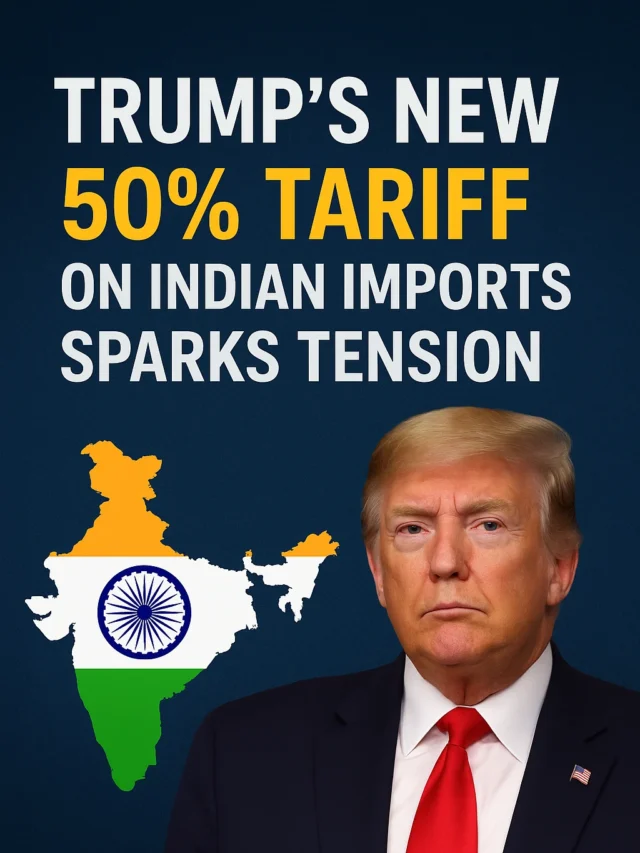
Another major reason is the impact of tariffs and supply chain issues. The company acknowledged that unexpected tariff costs and inventory resetting (discounts/promotions) in several regions have pressured margins — some reports mention additional tariff costs of approximately $1.5 billion annually. This margin pressure is negatively affecting Nike’s stock, and investors have become cautious about future guidance.
Tariffs and Supply Chain Reset Are Squeezing Nike’s Profitability
Unexpected tariff expenses, inventory clean-up, and regional discounting are weighing heavily on margins — and on investor confidence.
Tariffs are a major drag
Nike acknowledged that higher-than-expected tariff costs have become a meaningful financial burden. Some reports estimate the added cost impact at roughly $1.5 billion annually.
Inventory reset is hurting margins
To stabilize supply chains and clear stock, Nike has relied on discounts and promotions across multiple regions — a strategy that supports sales volume but compresses profitability.
How investors are reacting
The combined effect of tariff expenses and shrinking margins has pressured Nike’s share price. With profitability in question, investors have grown more cautious about forward guidance.
Market Reaction: The sharp drop in pre-market trading indicates that traders and algorithmic programs quickly priced in the company’s guidance and regional weaknesses. Options market and pricing signals also suggest that Nike’s stock is expected to experience more volatility in the coming days — meaning short-term volatility may increase. For long-term investors, the key question is whether these are temporary pressures or structural changes.
Pre-Market Selling Shows Wall Street Quickly Priced the Bad News
Traders and algorithms moved fast — and options markets now point to heightened near-term volatility.
Speed of the sell-off
The sharp pre-market drop suggests that traders, funds, and algorithmic trading programs immediately priced in Nike’s weak guidance and regional performance concerns.
What options markets are signaling
Options activity and pricing imply that the market expects more movement ahead — pointing toward increased short-term volatility in the stock.
The bigger investor question
For long-term investors, the key issue is whether these pressures are temporary or signs of deeper structural change — and markets will trade based on how convincing that answer becomes.
What should investors look for? (Practical points):
- Margin Trend: The direction of gross margins over the next three to four quarters will determine whether a recovery in Nike stock is possible.
- China Recovery: Without a sustained improvement in sales in Greater China, pressure on Nike stock is likely to persist.
- Nike’s Strategy: The company’s direct-to-consumer (digital + own stores) strategy needs to be restored – this is the high-margin channel that can drive long-term profitability.
- Tariffs/Customs Costs: Any significant changes in the supply chain or lower tariff exposure will only help if the cost structure improves. This could be a game-changer for NKE stock.
Decision Time: If you are a trader, short-term risk management (stop-losses, position sizing) is crucial, considering the pre-market decline and volatility; if you are a long-term investor, consider carefully before making any major decisions, waiting for evidence of Nike’s market recovery, stabilization in China, and margin improvement. Overall, this move in Nike stock is alarming, but the full story isn’t over yet—the company’s surrounding indicators will reveal the true direction.
Conclusion: Nike’s recent pre-market decline wasn’t due to a single factor—it’s a combination of weak sales in China, tariff pressures, and margin concerns. Readers of this article should understand that Nike stock now presents both challenges and opportunities—but whatever decision you make, base it on data and employ sound risk management practices.