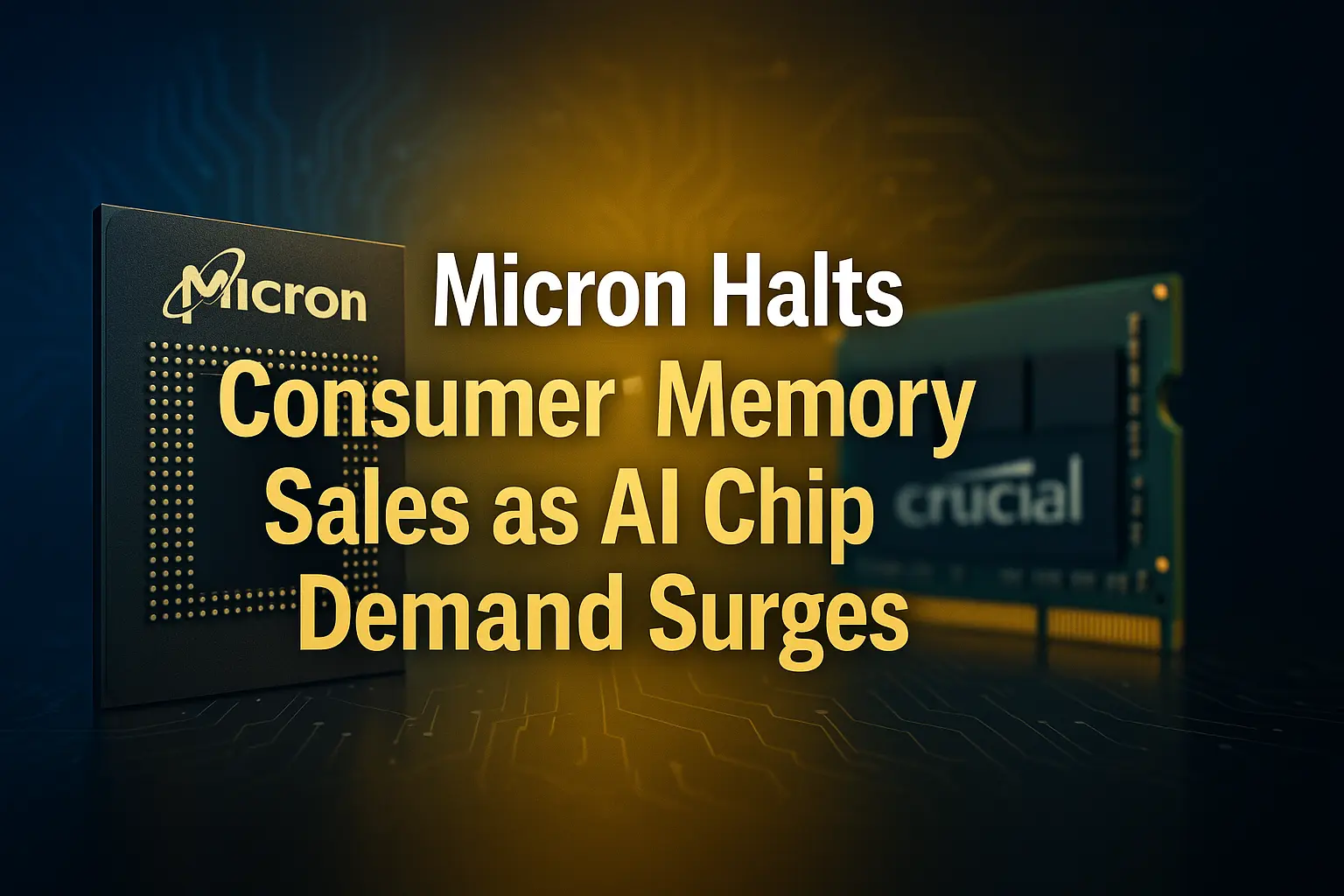
The big news today is that Micron has decided to phase out its consumer-facing brand Crucial and reduce consumer-facing RAM/SSD sales. The company’s reasoning is clear: the rapidly growing demand for artificial intelligence (AI) and data centers has made the need for high-bandwidth memory (HBM) and enterprise-grade DRAM greater than ever, and Micron is now redirecting its product capabilities toward those large AI customers.
This move didn’t come suddenly. In recent months, the demand for memory bandwidth from AI models and large-scale cloud accelerators has led to increased prices and prioritization of HBM and enterprise memory. Micron says this strategic shift will help the company better support its key, high-margin customers—such as cloud hyperscalers and AI infrastructure providers.
Micron/Crucial Product Update — What Consumers Should Know
The most direct impact to consumers will be that new RAM and SSD models from Micron’s brand Crucial may disappear from retail, with shipments phased out and limited to February 2026. The company also stated that warranty and support for existing products will continue, but new shipments and retail offerings are subject to change.
Its market impact (considering US-based readers):
- DDR5 and SSD prices may face upward pressure, especially for models that have been selling as Crucial RAM or budget-focused SSDs. Many retailers and DIY builders are already signaling these price shifts.
- Small-medium OEMs and system builders may face supply chain difficulties as Micron will now focus its production capacity on AI-grade memory.
- Other major memory companies, such as Samsung and SK Hynix, are also focusing on HBM and enterprise memory—meaning supply difficulties may be widespread, not just Micron-specific.
What it means for investors and market participants: Micron’s move could shift the company’s revenue mix—from consumer to enterprise/AI—which could boost profitability in the short term despite the brand pause. However, the memory industry is traditionally cyclical; therefore, those considering Micron stock or investing in the memory sector should monitor the sustainability of AI demand and global supply response.
Now, as for the average consumer (US-based) – if you’re thinking about building a new PC or buying RAM/SSD right now, a few things to keep in mind:
- Consider your needs—if you need an immediate upgrade (for work/gaming), it’s best to buy the one that’s currently available; but if you plan to buy in the next few months, keep checking prices and availability.
- If Crucial isn’t listed on the brand list, look for other options (Samsung, SK Hynix-backed modules, and third-party OEMs).
- If you’re planning a large-volume purchase, pay special attention to retailer relations and warranty policies—as support models may change.
Conclusion: Overall, Micron’s decision appears to be a logical business decision in the era of the AI boom and HBM boom. While this may cause temporary pain and price spikes for consumer devices (Crucial RAM/SSD), at the enterprise level, it’s an attempt to better align memory supply with AI customers. The key advice for US readers is to base purchasing decisions on immediate needs and market trends, and if you’re an investor, keep a close eye on the strategies of Micron and competing memory manufacturers.