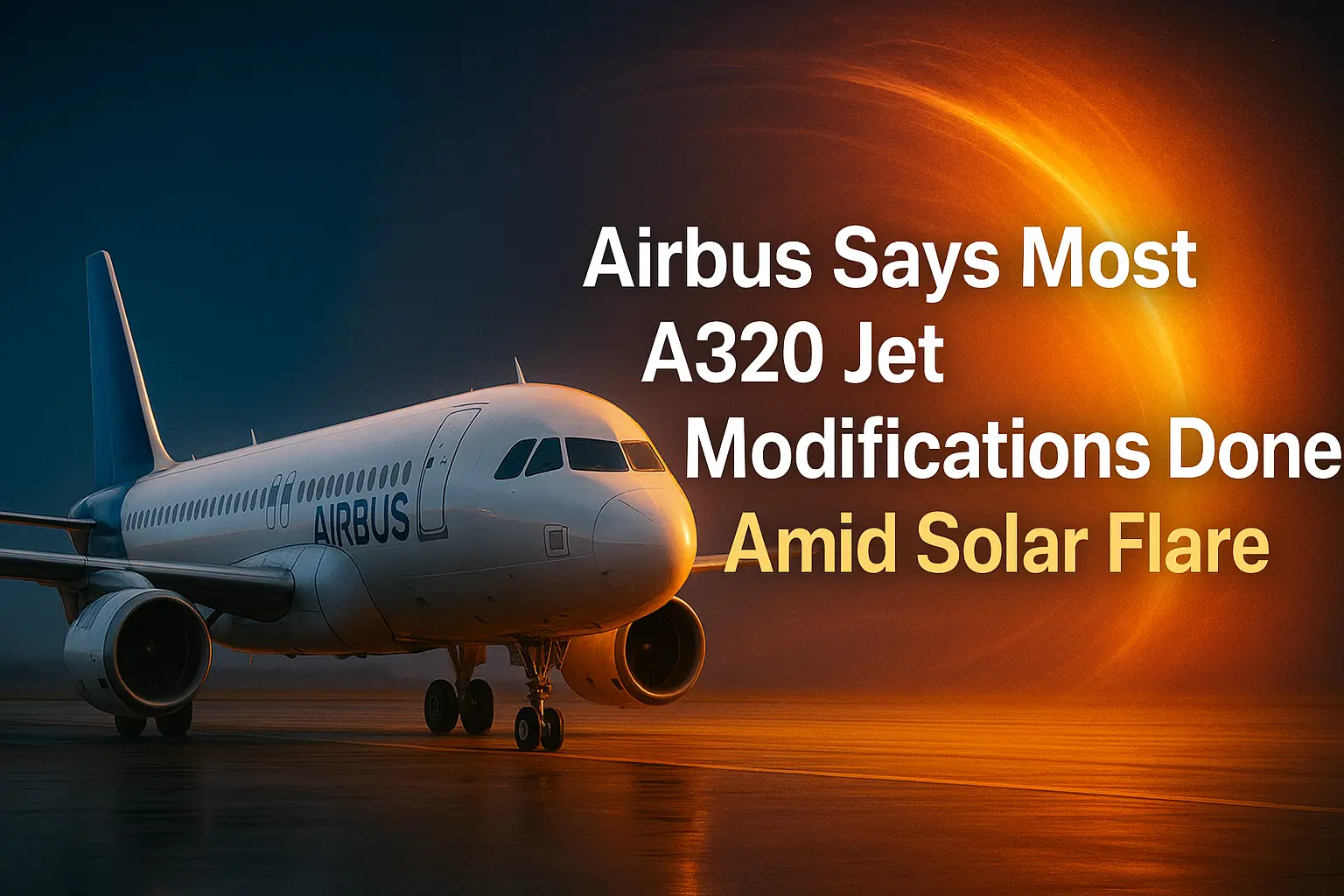
Airbus recently announced that the necessary changes (software/hardware updates) have been completed for most of its A320-family jets. According to the company, approximately 6,000 aircraft were potentially affected, and the modifications have now been implemented on most of them; only a small number of aircraft (less than a hundred) remain, and work on those is progressing rapidly.
The action was swiftly initiated after an A320-series aircraft experienced a temporary flight-control problem – investigations found that intense solar radiation (sometimes associated with space-weather phenomena such as a solar flare) could have affected sensitive data. Airbus said it immediately issued precautionary ground actions and implemented the necessary software changes to mitigate the risk.
Why was it necessary
Aircraft manufacturers and regulatory bodies (such as the FAA and EASA) recognise that some electronic systems and sensors may be temporarily affected by excessive solar radiation or solar flare-induced events—particularly during periods of active space weather. Maintaining the integrity of flight control data is crucial to ensuring normal flight performance and passenger safety. The FAA and the meteorological community have previously indicated that space weather events may impact aviation communications and navigation.
Airbus stated that the changes were primarily software rollbacks and some system-mitigation improvements to reduce the potential for data corruption during events like solar flares. To implement this, airlines (JetBlue, American Airlines, and others) worked together to roll out updates overnight and on a tight schedule.
Impact on airlines and passengers
Some airlines experienced short-term flight rescheduling or technical downtime during the update process, but it was widely reported that most operators completed the update quickly, therefore minimising risk to passengers and limiting confusion. Major US operators, such as JetBlue (or some JetBlue aircraft), American Airlines, also implemented fixes and provided general information to passengers.
Remember that under normal circumstances, minor solar flare events are not considered directly hazardous to everyday flights; however, when a system is vulnerable, regulations require immediate action. The FAA and research articles indicate that space weather can often impact communications (HF), GPS/navigation, and sometimes aviation electronics—so precaution is the best strategy.
Experts’ perspective and future
Aviation analysts say Airbus’s swift and transparent response is a good sign—it builds confidence and ensures future space-weather-induced vulnerabilities can be detected in a timely manner. Researchers, meanwhile, say solar flare-impact monitoring and airframe-level mitigations could become more stringent, especially when large-flown models like the A320 family are involved.
Airbus has reported that most A320 jets have been updated—this is positive news as it will impact both flight safety and reliability. If you’re flying JetBlue, American Airlines, or another airline, your flight can currently be considered generally safe, as most aircraft have been updated; only a few aircraft remain to be repaired and are being brought back on track relatively soon. Airbus and regulators will continue to support and monitor to ensure the impact of space-weather challenges like solar flares is as minimal as possible.