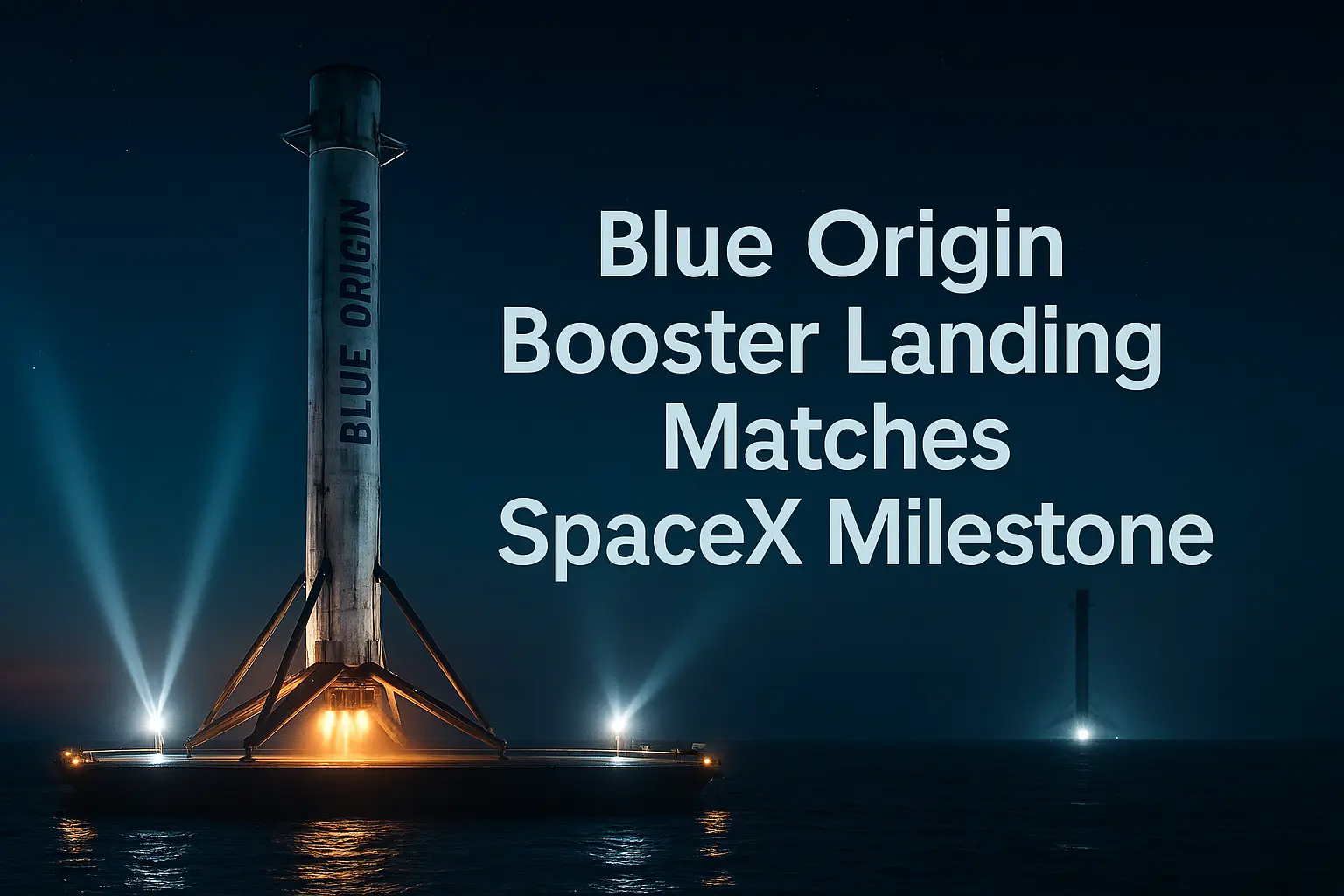
On November 13, 2025, Blue Origin achieved what many had hoped for—the company’s massive New Glenn rocket successfully lifted off, and its first stage (booster) returned and landed safely on a barge at sea. The mission delivered two NASA ESCAPADE satellites to their intended orbit, and the successful booster recovery solidified Blue Origin’s reusability prowess.
During the mission, New Glenn’s first stage returned to rest on the barge “Jacklyn” within about 10 minutes—the same type of vertically controlled return that SpaceX has routinely performed in the past. This is significant for Blue Origin, as the booster landing was unsuccessful on its first attempt in January; this time, the company has demonstrated rapid improvements in its technology and operations.
This achievement is significant because booster recovery opens the door to reducing costs and speeding up launch cycles in the commercial space sector. SpaceX pioneered and commercially proved reusable booster landings—now Blue Origin is taking clear steps in this direction, raising the possibility of even more intense competition in the space launch market. It’s safe to say that Blue Origin has now come closer to SpaceX, but it’s still too early to call them completely equal; the two companies have different technologies, operations, and relevance in various fields.
Technically, the first part of New Glenn is specifically designed for reuse. It features engines and robust landing legs that help the rocket land safely. Furthermore, its guidance system is so intelligent that even when carrying a heavy payload, the booster can land safely upright. The company says the booster can be flown multiple times, avoiding new costs for each mission, significantly reducing costs. In fact, this design demonstrates how private companies are advancing their technology and working to make space travel more affordable and accessible.
NASA & Commercial Impact – Key Points
This development is also significant for NASA: the agency selected Blue Origin for its ESCAPADE scientific venture this time, and the successful launch and recovery demonstrate that private companies can now serve as reliable partners for major science missions. This could expand the scope of future commercial contracts with NASA and other agencies, providing more options in satellite internet, scientific missions, and commercial launch services. The potential market impact and strategic importance of this move remain to be seen.
Why SpaceX Tested a Flip and Engine-Out Landing with Booster 16 in Starship Flight 10
The simple implication for the reader is that as more companies develop reusable rockets, access to space is becoming more affordable and repeatable. This means: satellite services, space-based research, and future large missions—such as plans for Mars—may become more feasible than ever before. Blue Origin’s success will create more options in the private space race, benefiting both consumers and scientists.
Blue Origin has further testing, iteration, and commercial missions planned for New Glenn as its next steps. The company’s goals include larger payloads, more flight cycles, and long-term reusability—meaning we can expect to see even more flights and booster recoveries in the months and years ahead.
In conclusion: Today’s landing makes it clear that “Blue Origin” isn’t just about tourism—it’s also entered the world of heavy orbital launch and booster recovery. This move will further strengthen competition from companies like SpaceX and help make access to space cheaper and more reliable.
Someone, quick question:
Does this mean Blue Origin is now on par with SpaceX? — Not quite yet, but it appears Blue Origin has made significant progress in booster recovery and is now a serious competitor in the space launch market.
Will this technology provide us with affordable satellite service? — The potential has increased; reusable boosters are an important way to reduce costs, but the real impact will only become clear over time.